

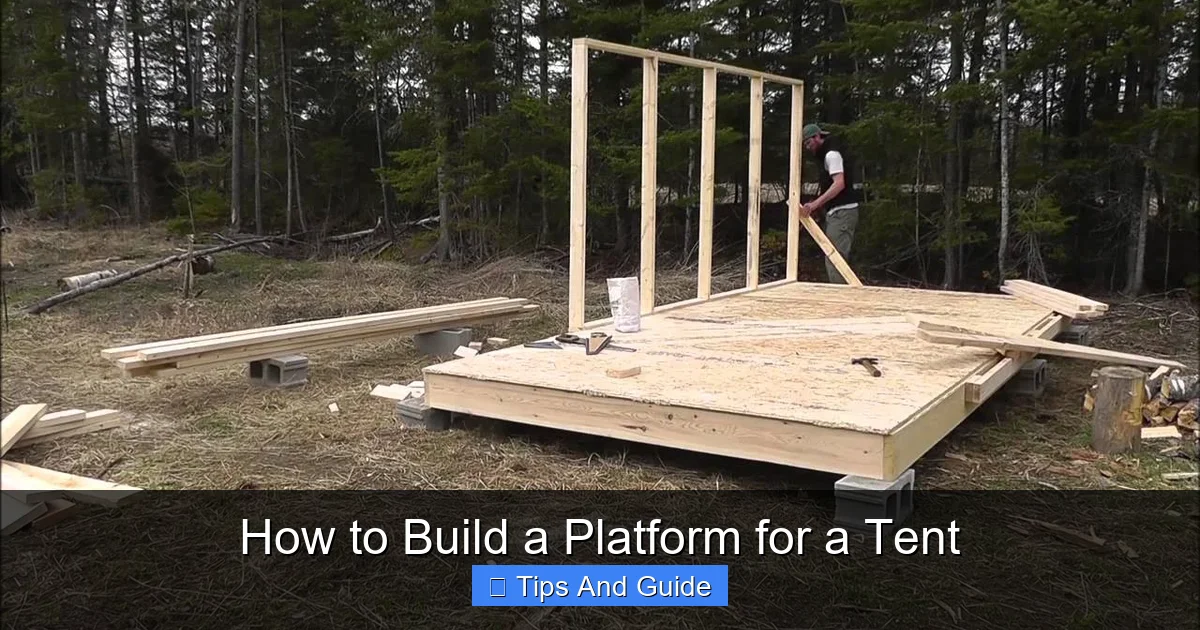
Elevate your camping with a sturdy, level tent platform! This guide walks you through designing and building a durable base for your tent, ensuring a comfortable and stable experience, especially on uneven terrain. You’ll learn about essential materials, necessary tools, and a clear, step-by-step construction process to achieve a professional-looking platform. Enjoy a more comfortable and secure night’s sleep in the great outdoors.
## How to Build a Platform for a Tent
Camping is a fantastic way to disconnect from the everyday hustle and reconnect with nature. But let’s be honest, sleeping on uneven ground can quickly turn a relaxing trip into a frustrating one. That’s where a tent platform comes in! Building a solid, level platform for your tent can dramatically improve your camping comfort and overall experience. Whether you’re setting up camp in a backyard, a designated campsite, or a more remote location, a well-constructed platform offers a stable and comfortable base.
In this comprehensive guide, you’ll learn everything you need to know to build your own tent platform. We’ll cover essential design considerations, material choices, the tools you’ll need, and provide a clear, step-by-step construction process. By the end of this guide, you’ll be equipped to build a durable and functional platform that will make your future camping trips much more enjoyable.
## Planning Your Tent Platform
Before you grab any tools, take some time to plan. Good planning prevents headaches later on!
### Determining the Size and Shape
The first step is to decide on the dimensions of your platform. This should be based on the size of the tent you plan to use. It’s generally a good idea to make the platform slightly larger than your tent’s footprint. This extra space provides room to move around inside the tent, store gear, and can prevent the tent fabric from rubbing against the edges of the platform.
Consider the typical tent sizes you might use. For a two-person tent, a 6×8 foot platform might be sufficient. For a larger family tent, you might need an 8×10 foot or even larger. Measure your tent’s dimensions and add at least 1-2 feet to each side.
The shape of your platform will usually be rectangular or square, as this is the most efficient and easiest to build.
### Choosing the Location
Selecting the right spot for your tent platform is crucial for stability, drainage, and overall comfort.
#### Site Assessment
* Levelness: Look for an area that is as naturally level as possible. While you’ll be leveling the platform itself, starting with a relatively flat surface makes the job much easier.
* Drainage: Avoid low-lying areas where water tends to collect. You want your platform to stay dry. Observe the area after rain to see how water flows.
* Sun and Shade: Consider how the sun will hit the platform throughout the day. Morning shade can be pleasant, while a spot that gets full sun might heat up quickly.
* Obstacles: Check for overhanging branches, roots, or rocks that could interfere with the platform or pose a hazard.
* Accessibility: Think about how you will get materials to the site and how easily you can access the platform once it’s built.
### Material Selection
The materials you choose will impact the durability, cost, and appearance of your tent platform.
#### Lumber Options
* Pressure-Treated Lumber: This is the most common and recommended choice for outdoor structures like tent platforms. It’s treated to resist rot, decay, and insect infestation, making it highly durable. Use it for the frame and supports.
* Composite Decking: This is an excellent option for the surface of your platform. It’s weather-resistant, low-maintenance, and doesn’t splinter like traditional wood. It can be more expensive than wood.
* Cedar or Redwood: These are naturally rot-resistant and attractive woods, but they are generally more expensive and may require more maintenance than pressure-treated lumber.
#### Fasteners
* Deck Screws: Use exterior-grade deck screws that are corrosion-resistant, especially when working with pressure-treated lumber, as some treatments can corrode standard fasteners.
* Lag Bolts: These are useful for securing the main structural components.
#### Foundation Materials
* Concrete Blocks or Pavers: These can be used as simple footings for your support posts, especially if you want a simpler, less permanent structure.
* Concrete Footings: For a more permanent and stable platform, consider pouring concrete footings.
## Tools You’ll Need
Having the right tools will make the building process smoother and more efficient.
* Measuring Tape: For accurate measurements.
* Level: A long level (4-6 feet) is ideal for ensuring everything is plumb and level.
* Saw: A circular saw or hand saw for cutting lumber.
* Drill/Driver: For pre-drilling holes and driving screws.
* Shovel: For digging holes for supports or leveling the ground.
* Wheelbarrow (optional): For moving soil or concrete.
* Safety Glasses: Essential for protecting your eyes.
* Work Gloves: To protect your hands.
* Hammer: For any minor adjustments or securing elements.
* Post Hole Digger (if using posts): For digging deep, narrow holes.
* Square: For ensuring right angles.
## Step-by-Step Construction Guide
Let’s get building! Follow these steps to construct your tent platform.
### Step 1: Prepare the Site
Before you start building, you need to prepare the ground.
#### H3: Clearing and Leveling the Area
* Remove any grass, weeds, rocks, or debris from the area where the platform will sit.
* Use your shovel to lightly grade the area, making it as level as possible. This will simplify the subsequent steps.
* If you’re using a more permanent foundation, you might need to dig out a bit more to accommodate your footings or concrete blocks.
### Step 2: Install the Foundation Supports
This is the base of your platform, and its stability is critical. You have a few options here, ranging from simple to more robust.
#### Option A: Using Concrete Blocks or Pavers
* Place your concrete blocks or pavers at the corners and along the perimeter where your support beams will rest.
* Use your level to ensure each block or paver is perfectly level with the others. You can dig slightly into the ground to set them firmly.
* This method is good for temporary or semi-permanent platforms and works best on ground that is already quite level.
#### Option B: Using Ground Contact Posts
* Determine how many support posts you need. This will depend on the size of your platform and the spacing of your joists. Typically, posts are spaced every 4-6 feet.
* Using a post hole digger or shovel, dig holes for your posts. The depth will depend on your local frost line and desired platform height. Aim for at least 2-3 feet deep for stability.
* Place your pressure-treated posts in the holes.
* Use your level to ensure each post is perfectly vertical (plumb). Brace them temporarily if needed.
* Fill the holes with the excavated soil, tamping it down firmly as you go. For extra stability, you can add gravel to the bottom of the holes and use concrete to set the posts.
#### Option C: Pouring Concrete Footings
* Dig holes for your footings to the desired depth, below the frost line if applicable.
* Pour concrete into the holes and set post anchors or concrete piers into the wet concrete, ensuring they are level and correctly positioned.
* Allow the concrete to cure completely according to the manufacturer’s instructions.
### Step 3: Build the Frame (Outer Rim Joists)
This step creates the outer boundary of your platform.
#### H3: Cutting and Assembling the Frame
* Cut your pressure-treated lumber (e.g., 2x6s or 2x8s) to create the outer perimeter of your platform. For an 8×10 foot platform, you’ll need two 10-foot pieces and two 8-foot pieces.
* Arrange these pieces on top of your foundation supports.
* Use your level to ensure the frame is perfectly level in all directions. Adjust your supports as needed.
* Secure the frame pieces together at the corners using lag screws or deck screws, ensuring they form perfect right angles using your square.
### Step 4: Install the Inner Joists
The inner joists provide the structural support for the platform’s surface.
#### H3: Spacing and Securing Joists
* Cut joists (same lumber as the frame) to fit snugly inside the frame. For an 8×10 platform, these would be 8 feet long.
* Space the joists evenly. For most tent platforms, a spacing of 16 inches on center is sufficient for a strong surface. You can measure and mark the inside of the frame for joist placement.
* Attach the joists to the outer frame using deck screws. It’s best to pre-drill holes to prevent the wood from splitting.
* Ensure each joist is level with the frame.
### Step 5: Install the Decking (Platform Surface)
This is the part you’ll be walking on and where your tent will sit.
#### H3: Laying Down Deck Boards
* Begin laying your deck boards (composite or wood) across the joists. Start at one edge of the platform.
* Leave a small gap (e.g., 1/8 inch) between deck boards to allow for expansion and drainage. You can use a nail or spacer for consistent gaps.
* Cut the deck boards to length as needed. For the last board, you might need to rip it lengthwise to fit.
* Secure each deck board to every joist it crosses using two deck screws. Drive the screws flush with the surface of the board.
* Ensure the ends of the deck boards are flush with the outer frame or have a slight overhang.
### Step 6: Finishing Touches and Reinforcement
Once the main structure is complete, add any necessary finishing touches.
#### H3: Inspecting and Reinforcing
* Walk around the platform and check for any wobbly spots or areas that need extra support.
* Add diagonal bracing underneath the frame if you feel it needs more rigidity, especially for larger platforms.
* Sand down any rough edges on wooden decking to prevent splinters.
* Consider applying a sealant or stain to wooden components if they are not pressure-treated, to further protect them from the elements.
## Practical Tips for a Better Platform
* Measure Twice, Cut Once: This old adage is especially true for construction projects. Accuracy saves materials and time.
* Pre-Drill Holes: Always pre-drill pilot holes for screws, especially near the ends of boards, to prevent wood from splitting.
* Use a Speed Square: This handy tool helps you mark straight cuts and ensure corners are perfectly square.
* Consider Height: Think about how high you want your platform. A few inches off the ground is usually enough to keep you dry and away from insects.
* Elevate for Airflow: Ensuring there’s space underneath the platform allows for airflow, which helps keep the wood from rotting and can prevent moisture buildup.
* Modular Design: For a less permanent setup, consider building smaller modular sections that can be assembled on-site.
## Troubleshooting Common Issues
* Platform is Not Level: If you discover your platform isn’t level after construction, you may need to shim the supports or, in more severe cases, partially disassemble and re-level the frame. This highlights the importance of constant checking with a level during construction.
* Wobbly Platform: This usually indicates insufficient support. Check the foundation, add more joists, or install diagonal bracing underneath the frame.
* Wood Splitting: This is often due to driving screws too close to the edge of the wood or not pre-drilling. Use screws designed for exterior use and always pre-drill.
* Water Pooling: Ensure your site has good drainage and that your platform has a slight slope away from any structures. Gaps between deck boards also help with drainage.
## Conclusion
Building a tent platform might seem like a daunting task, but with careful planning and execution, it’s a very achievable DIY project. A well-built platform will transform your camping experience, providing a stable, level, and comfortable space for your tent. It protects you from uneven ground, moisture, and creepy crawlies, allowing you to truly relax and enjoy the great outdoors.
Remember to prioritize safety throughout the process, wear your protective gear, and take your time with each step. Whether you’re a seasoned camper or just starting out, a tent platform is an investment that pays off in comfort and enjoyment for years to come. So, gather your materials, grab your tools, and get ready to elevate your next camping adventure!
- Site Selection is Crucial: Choose a level area with good drainage, away from potential hazards like falling branches.
- Material Choices Matter: Opt for durable, weather-resistant materials like pressure-treated lumber or composite decking for longevity.
- Foundation is Key: Properly set posts or concrete footings will ensure the platform’s stability and prevent settling.
- Leveling is Paramount: Use a level throughout the process to guarantee a flat surface for your tent.
- Consider Size and Weight: Design the platform to accommodate your tent size and anticipate the weight it will bear.
- Safety First: Always wear appropriate safety gear, such as gloves and eye protection, during construction.
