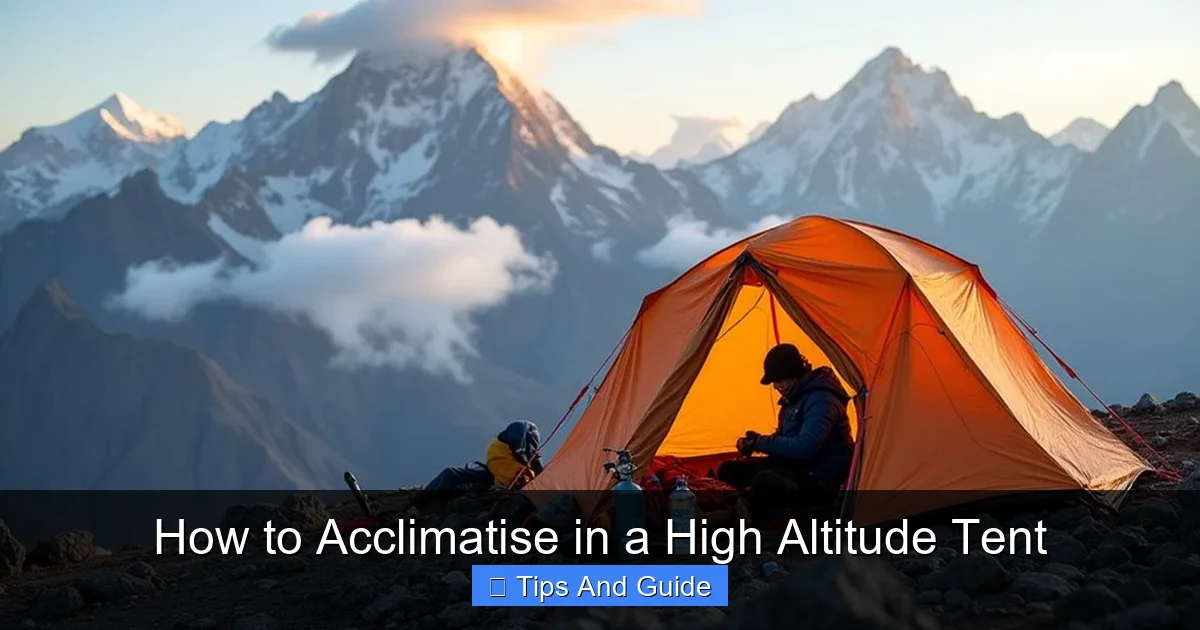
How to Acclimatise in a High Altitude Tent
This comprehensive guide will teach you how to acclimatise effectively in a high altitude tent, a crucial step for enjoying your mountain adventures. We cover essential preparation, gradual ascent strategies, and recognizing symptoms of altitude sickness. By following these steps, you can maximize your comfort and safety at higher elevations, ensuring a more enjoyable and successful trip.
## How to Acclimatise in a High Altitude Tent
Embarking on a journey to high altitudes is an exhilarating experience, offering breathtaking views and a sense of accomplishment. However, the thinner air at elevated elevations presents a unique challenge: altitude sickness. One of the most effective ways to mitigate the risks and enjoy your trip is by utilizing a high altitude tent. But what exactly does that mean, and how do you get the most out of this specialized equipment? This guide will walk you through everything you need to know about acclimatising in a high altitude tent, ensuring your adventure is safe and memorable.
You’ll learn what a high altitude tent is, why it’s beneficial, and the crucial steps to take before, during, and after using one to ensure your body adjusts safely to lower oxygen levels. We’ll cover everything from preparation to recognizing and managing symptoms, empowering you to conquer the mountains with confidence.
## Understanding High Altitude Tents
Before we dive into the acclimatisation process, let’s clarify what a high altitude tent is and how it differs from a standard camping tent. While the term “high altitude tent” might conjure images of specialized structures for mountaineers, in the context of acclimatisation, it often refers to a “hypoxic tent” or “altitude simulation tent.” These are typically home-based systems that use a generator to reduce the oxygen concentration within a sealed tent, simulating the effects of high altitude at sea level.
The primary purpose of using a hypoxic tent is to trigger physiological adaptations that prepare your body for true high-altitude exposure. By regularly sleeping in this simulated environment, your body can increase its production of red blood cells, which are responsible for carrying oxygen. This increased oxygen-carrying capacity can significantly reduce the risk and severity of altitude sickness when you eventually travel to a real high-altitude location.
## The Importance of Acclimatisation
Acclimatisation is the process by which your body adapts to lower oxygen levels at high altitudes. Without proper acclimatisation, you risk developing altitude sickness, which can range from mild discomfort to life-threatening conditions like High Altitude Pulmonary Edema (HAPE) and High Altitude Cerebral Edema (HACE).
The general rule of thumb for ascent is “climb high, sleep low,” but with a hypoxic tent, you can effectively “sleep high” at home, allowing for a more gradual and controlled acclimatisation process before you even reach your destination. This proactive approach can make a world of difference in your overall experience.
## Pre-Tent Preparation
Even before you set up your high altitude tent, there are important steps to take.
### Consult Your Doctor
This is a non-negotiable first step, especially if you have any pre-existing health conditions. Your doctor can assess your fitness for high altitudes and provide personalized advice.
### Choose the Right Tent System
There are various hypoxic tent systems available. Consider factors like the size of the tent, the noise level of the generator, ease of setup, and the specific altitude simulation capabilities.
### Understand the Settings
Familiarize yourself with the altitude simulator’s settings. You’ll typically adjust the oxygen percentage or the simulated altitude. Start conservatively.
## Setting Up Your High Altitude Tent
Setting up your hypoxic tent is similar to setting up a regular camping tent, but with added consideration for the altitude generator.
### Choose a Suitable Location
Find a space in your home where the tent can be set up undisturbed. It needs to be a level surface. Ensure there’s access to a power outlet for the generator.
### Assemble the Tent Frame
Follow the manufacturer’s instructions to assemble the tent frame. Most systems are designed for relatively easy setup.
### Attach the Tent Fabric
Drape the tent fabric over the frame and secure it. Ensure all zippers and openings are properly closed to create a sealed environment.
### Connect the Altitude Generator
This is the crucial step that differentiates a hypoxic tent. Connect the generator to the tent using the provided tubing. Make sure the connections are secure to prevent oxygen leakage.
### Test the System
Turn on the altitude generator and set it to a mild simulated altitude, perhaps equivalent to 5,000 feet (around 1,500 meters). Let it run for a while to ensure it’s functioning correctly and the tent is inflating properly (if applicable) and maintaining the simulated environment.
## The Acclimatisation Process: Step-by-Step
Once your tent is set up and functioning, the acclimatisation process begins. This is not a passive activity; it requires commitment and careful monitoring.
### Step 1: Gradual Introduction
Start Slowly: Do not immediately set your tent to simulate a very high altitude. Begin with a simulated altitude that is only slightly higher than your current living elevation. If you live at sea level, start with an equivalent of 5,000-6,000 feet (1,500-1,800 meters).
Duration: Spend a few nights at this initial level. The goal is to allow your body to get used to the slightly lower oxygen content without causing significant discomfort.
### Step 2: Increasing Simulated Altitude
Incremental Increases: After a few nights at the initial level, gradually increase the simulated altitude. Add about 1,000-2,000 feet (300-600 meters) every 2-3 nights. For example, move from 6,000 feet to 7,000 feet, then to 8,000 feet.
Listen to Your Body: This is the most important advice. If you experience any symptoms of altitude sickness (headache, nausea, dizziness, fatigue), do not increase the altitude. Stay at the current level until symptoms subside, or even reduce the altitude slightly if symptoms are persistent.
### Step 3: Duration at Higher Simulated Altitudes
Simulating Your Target: As you approach the altitude you plan to visit, try to simulate that altitude in your tent for at least a week. If you’re going to hike in the Himalayas, aiming for simulated altitudes of 10,000-15,000 feet (3,000-4,500 meters) for extended periods can be highly beneficial. However, be realistic about what your body can tolerate and always prioritize safety. It’s generally not recommended to simulate altitudes above 15,000 feet (4,500 meters) without professional guidance.
Consistency is Key: Aim to sleep in the tent every night during your acclimatisation period. The consistent exposure is what triggers the physiological adaptations. While daytime exposure is also beneficial, nighttime sleep is the most impactful.
### Step 4: Maintaining and Descending (Simulated)
Maintenance: Once you’ve reached your desired simulated altitude, you can maintain it for a period. If you have a trip planned in a few weeks, spending the last 7-10 days at your target simulated altitude is ideal.
The “Sleep Low” Principle at Home: Some people find it beneficial to occasionally sleep at a slightly lower simulated altitude even after reaching a high one, mirroring the “sleep low” principle. This can help your body recover while still maintaining some of the adaptations.
## Recognizing and Managing Altitude Sickness Symptoms
Even with a high altitude tent, it’s crucial to be aware of altitude sickness symptoms. These can occur during the acclimatisation process or at your actual destination.
### Symptoms of Acute Mountain Sickness (AMS)
The most common form of altitude sickness is AMS. Symptoms usually appear within 6-24 hours of ascending to a higher altitude and can include:
- Headache (often the first symptom)
- Nausea and vomiting
- Dizziness and lightheadedness
- Fatigue and weakness
- Loss of appetite
- Difficulty sleeping
- Rapid pulse
### When to Descend
If you experience mild symptoms, resting at your current altitude and staying hydrated might be sufficient. However, if symptoms persist, worsen, or if you develop signs of more severe conditions, descending immediately is the most effective treatment. Never ascend further if you have symptoms of AMS.
### Severe Forms of Altitude Sickness
High Altitude Cerebral Edema (HACE): This is a more severe form where fluid builds up in the brain. Symptoms include severe headache, confusion, loss of coordination (ataxia), drowsiness, and potentially coma.
High Altitude Pulmonary Edema (HAPE): This occurs when fluid accumulates in the lungs. Symptoms include shortness of breath, a persistent cough (which may produce frothy or pink sputum), chest tightness, and extreme fatigue.
If you suspect HACE or HAPE, immediate descent and medical attention are critical.
## Practical Tips for Using a High Altitude Tent
Here are some extra tips to enhance your experience with a hypoxic tent:
### Hydration is Paramount
Drink plenty of water, even when you’re not at a high altitude. Dehydration can mimic and worsen altitude sickness symptoms. Aim for 2-4 liters of water per day, and more if you’re exercising. Using a water bottle inside the tent is a good habit to get into.
### Nutrition for Altitude
Focus on a diet high in complex carbohydrates. Your body uses more energy to process food at altitude. Avoid heavy, fatty meals. Small, frequent meals are often better tolerated than large ones. Some people find it helpful to have easily digestible snacks available, especially if they’re using a tent that simulates very high altitudes. A comfortable camping bed with a good [Best Camping Mattress For Tent](https://tentrm.com/best-camping-mattress-for-tent/) can also improve sleep quality.
### Avoid Alcohol and Caffeine
Both alcohol and caffeine can contribute to dehydration and disrupt sleep patterns, making altitude sickness symptoms worse. It’s best to abstain or limit consumption significantly during your acclimatisation period.
### Manage Sleep Quality
While the tent simulates altitude, your comfort inside still matters. Ensure you have a comfortable sleeping setup, perhaps using a good [Best Camping Mat For Tent](https://tentrm.com/best-camping-mat-for-tent/). If you’re finding it hard to sleep, try relaxation techniques or consult with your doctor about sleep aids that are safe for altitude.
### Monitor Generator Performance
Regularly check the altitude generator to ensure it’s running smoothly. Some generators can be noisy, so consider this when setting up your tent. If you’re looking for a quieter camping experience, you might consider a well-ventilated pop-up tent on your trip, but for acclimatisation, the generator’s performance is key.
### Gradual Re-entry
After a period of using the hypoxic tent, don’t immediately jump into extreme activity upon arrival at a real high altitude. Continue to ascend gradually and apply the principles of acclimatisation even after your home-based training.
### Combine with Other Acclimatisation Strategies
While a hypoxic tent is a powerful tool, it’s not a magic bullet. When you reach your actual destination, continue to implement best practices like gradual ascents, hydration, and listening to your body. If your trip involves camping in a beautiful location like Yosemite, finding a [Best Campground In Yosemite For Tent](https://tentrm.com/best-campground-in-yosemite-for-tent/) that allows for staged ascents is wise.
## Troubleshooting Common Issues
### Generator Noise
Some altitude generators can be noisy. Try placing the generator on a rug or mat to dampen vibrations. If noise is a major concern, look for quieter models or consider running the generator during the day while you’re out of the tent.
### Tent Condensation
Sealed tents can sometimes develop condensation. Ensure good ventilation within the tent system as recommended by the manufacturer. Some systems have built-in fans to help circulate air.
### Not Feeling the Effects
If you’re not feeling any noticeable effects even at higher simulated altitudes, double-check the seals on your tent and the connections to the generator. Ensure you are correctly following the altitude settings.
## Conclusion
Using a high altitude tent is an advanced and effective strategy for preparing your body for the challenges of high-altitude environments. By understanding the principles of acclimatisation, diligently following the setup and usage instructions, and listening closely to your body, you can significantly enhance your safety and enjoyment. Remember that this technology is a tool to assist your body’s natural processes, not replace them. Always prioritize gradual ascent, stay hydrated, eat well, and be prepared to descend if symptoms arise. With careful planning and execution, your high-altitude adventures will be more rewarding and less arduous. Happy trails!
Key Takeaways
- Understand Altitude Sickness: Recognize the symptoms of Acute Mountain Sickness (AMS), which can range from headaches and nausea to more severe conditions, and know that acclimatisation is your best defense.
- Gradual Ascent is Key: Avoid rapid ascents to high altitudes. Spend time at intermediate elevations to allow your body to adapt before pushing higher.
- Hydration is Crucial: Drink plenty of water. Dehydration can worsen altitude sickness symptoms, so aim for 2-4 liters per day, and more if you’re exerting yourself.
- Pace Yourself: Don’t overexert yourself, especially during the first few days at altitude. Listen to your body and rest when needed.
- Nutrition Matters: Eat small, frequent meals that are high in carbohydrates. Your body uses more energy to function at altitude.
- Avoid Alcohol and Caffeine: These can dehydrate you and interfere with sleep, exacerbating altitude sickness symptoms.
- Know When to Descend: If symptoms worsen or don’t improve with rest, descending to a lower altitude is the most effective treatment.