How Do You Draw a Tent
This guide will teach you how to draw a tent with simple, step-by-step instructions. You’ll learn to create basic shapes, add details, and shade your drawing to make it look realistic. Whether you’re a beginner or looking to improve your skills, these tips will help you draw various types of tents.
Ready to learn how to draw a tent? You’ve come to the right place! Drawing a tent might seem a bit daunting at first, but with a little practice and some easy-to-follow steps, you’ll be creating realistic and impressive tent drawings in no time. This guide is perfect for beginners and anyone who wants to add a tent to their sketches, illustrations, or even just for fun. We’ll break down the process into simple steps, starting with basic shapes and moving on to adding details and shading. By the end of this guide, you’ll have a solid understanding of how to draw different types of tents.
## Understanding the Basics: What is a Tent?
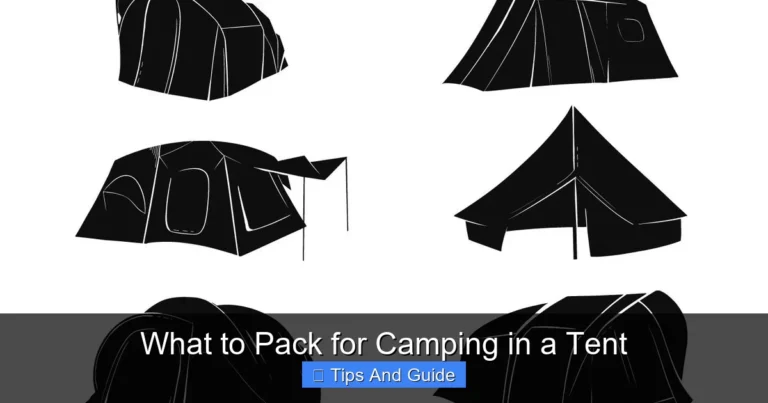
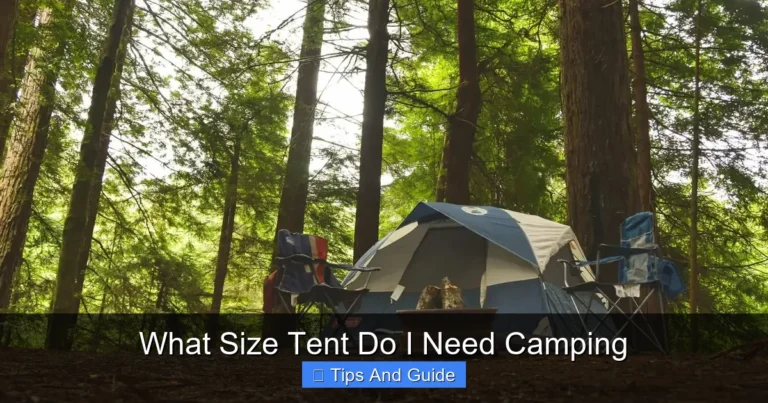
Before we pick up our pencils, let’s think about what a tent is. At its core, a tent is a portable shelter. They come in many shapes and sizes, but most share common structural elements. We’ll focus on a classic A-frame tent for our primary example, as it’s one of the simplest to draw and understand.
A typical tent consists of:
- The Canopy: This is the main fabric part that provides shelter.
- Poles: These support the canopy and give it shape.
- Stakes and Guy Lines: These anchor the tent to the ground and keep it taut.
We’ll start by sketching these elements.
## Step-by-Step Guide to Drawing a Tent
Let’s get started with the actual drawing! Grab your pencil, paper, and an eraser.
## Step 1: Sketching the Basic Shape (The Canopy)
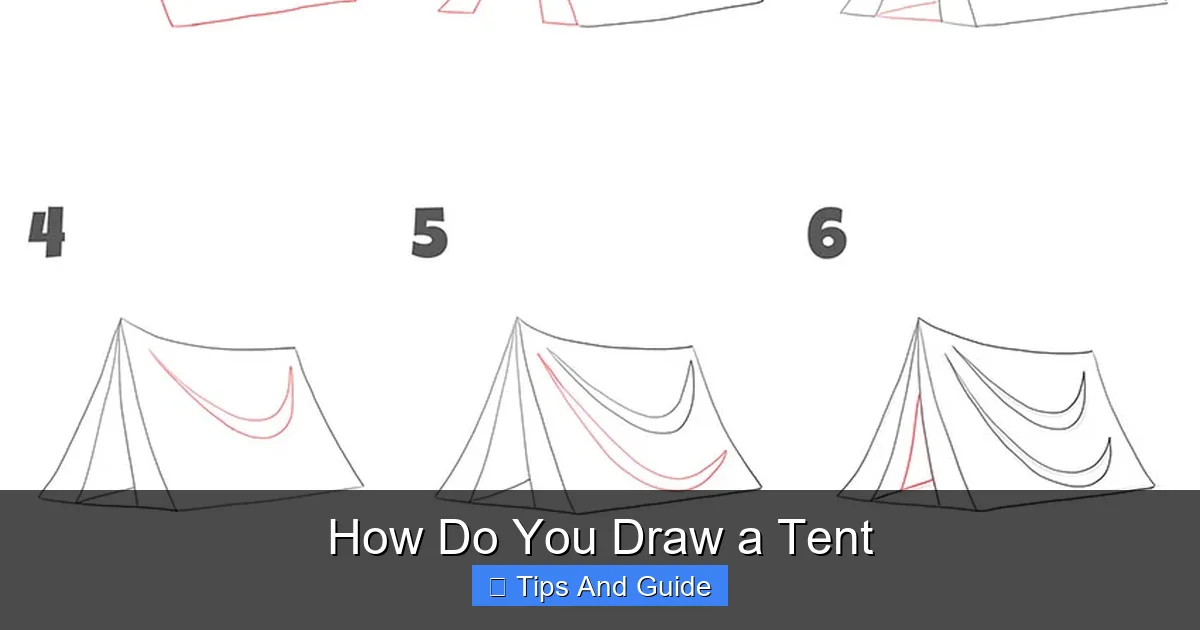
We’ll begin by creating the primary form of the tent. For a simple A-frame tent, this looks like an inverted ‘V’ or a triangle with its base flattened.
### H3: Drawing the Main Ridge
Start by drawing a horizontal line. This will represent the ridge line, the highest point of your tent. Don’t worry about making it perfectly straight; a slightly wobbly line can look more natural.
### H3: Adding the Sides
From each end of your horizontal ridge line, draw two diagonal lines going downwards and slightly outwards. These lines form the front and back slopes of your tent’s roof. Imagine you’re drawing an elongated triangle. The angle of these lines will determine how steep or shallow your tent’s roof is.
### H3: Creating the Base
Connect the bottom ends of the diagonal lines with another horizontal line. This forms the base of your tent, where it meets the ground. You can make this line slightly curved if you want to suggest that the tent is sitting on uneven ground.
At this point, you should have a basic triangular prism shape representing the main body of your tent. This is the foundation for everything else.
## Step 2: Adding Depth and Structure (Poles and Tent Shape)
Now we need to give our tent some form and suggest its internal structure. Tents aren’t perfectly flat; they have curves and tension.
### H3: Outlining the Tent Walls
Instead of drawing sharp, straight lines for the sides, you’ll want to add a slight curve or bulge. Think about how the fabric of a tent hangs between the poles. Draw a second set of lines parallel to your initial roof lines, but with a subtle outward curve. This creates the illusion of the tent fabric being pulled taut.
### H3: Suggesting the Poles
For an A-frame tent, you can imagine poles running along the ridge and down the sides. You don’t need to draw the poles themselves in detail unless you want to. Instead, you can suggest their presence.
- Ridge Pole: The ridge line you drew in Step 1 already represents the top of where a pole would be.
- Side Poles: You can indicate where the poles might be by drawing a slightly thicker or more defined line where the fabric seems to be most stretched, especially at the corners.
Alternatively, for a more stylized look, you could draw thin vertical lines coming down from the ends of the ridge line, representing the front and back poles.
## Step 3: Detailing Your Tent
This is where your tent starts to come alive! Adding details will make your drawing much more convincing.
### H3: Drawing the Entrance/Zipper
Most tents have an opening. For an A-frame, this is usually at one of the ends.
- Door Flap: Draw a large, often U-shaped or rectangular flap on one of the end panels.
- Zipper: You can draw a simple vertical line down the center of this flap to represent the zipper. Add small horizontal lines along this vertical line to show the zipper teeth.
You can also draw a slightly darker outline around the door flap to make it stand out.
### H3: Adding Vents and Windows
Many tents have small windows or vents for airflow.
- Placement: These are often found on the sides or near the top.
- Shape: Draw small squares, circles, or diamond shapes. You can fill them in with a darker shade or draw criss-cross lines inside to represent mesh.
### H3: Guy Lines and Stakes
These are crucial for a realistic tent drawing. Guy lines are ropes that extend from the tent to stakes in the ground, keeping the tent stable.
- Guy Lines: Draw thin lines extending diagonally from various points on the tent’s sides, especially from the corners or seams. Make sure these lines go outwards and downwards.
- Stakes: At the end of each guy line, draw a small, simple stake. This can be a small vertical line with a slight angle at the top, or a small triangle dug into the ground.
Don’t overdo it; a few well-placed guy lines and stakes will do the trick.
### H3: Seams and Textures
To add more realism, you can draw subtle lines to indicate seams where different pieces of fabric are joined. These lines should follow the shape of the tent. You can also add very light, wavy lines to suggest the texture of the fabric.
## Step 4: Shading and Lighting
Shading is what will make your tent drawing pop and look three-dimensional.
### H3: Identifying Light Sources
Decide where your light is coming from. Is it the sun overhead? A campfire nearby? This will determine where your shadows fall.
### H3: Adding Basic Shadows
Tents are not uniformly lit.
- Undersides: The bottom edges of the tent, the underside of any overhangs, and areas where the fabric is creased will be darker.
- Opposite the Light: The side of the tent facing away from your light source will be in shadow.
Use your pencil to apply shading. You can use light, sweeping strokes. Don’t press too hard initially; you can always add more layers of shading.
### H3: Creating Depth with Shadows
Think about how light interacts with fabric.
- Curves: On curved surfaces, shadows will transition smoothly from light to dark.
- Creases: Deeper creases or folds in the fabric will create darker, sharper shadows.
- Ground Shadow: The tent will cast a shadow on the ground. Draw a dark area extending away from the base of the tent, opposite the light source. The shape of this shadow will depend on the tent’s shape and the angle of the light.
### H3: Highlighting
Where the light hits the tent directly, you can leave areas lighter or even add small, bright highlights. This contrast between light and shadow is key to creating a realistic look.
## Drawing Different Types of Tents
The principles we’ve covered can be applied to many different tent styles.
### H3: Dome Tents
Dome tents have a more rounded, often segmented shape.
- Base: Start with a wider, more circular or oval base.
- Arches: Instead of sharp angles, draw curved poles that meet at the top, creating a dome. You’ll have multiple intersecting arches, giving it its characteristic rounded look.
- Fabric: The fabric will follow these curved lines, creating smooth, rounded surfaces.
If you’re looking for a tent with more headroom, you might be interested in the best pop up tent you can stand up in, which often features a dome or cabin style.
### H3: Tunnel Tents
Tunnel tents are characterized by their long, arched shape, resembling a tunnel.
- Shape: Draw a series of connected arcs, forming a long, rounded structure.
- Ends: The ends can be rounded or have a more angular entrance.
### H3: Pop-Up Tents
Pop-up tents are designed for quick setup. Their drawing can vary wildly depending on the specific design, but many share the rounded, often dome-like structures mentioned above. For quick camping, finding the best pop up tent review can help you visualize different styles. Some are incredibly easy to set up, like a best pop up tent on the market.
### H3: Camping Kitchen Tents / Gazebos
These are often more boxy or rectangular structures, sometimes with sloping roofs.
- Structure: Think of drawing a small shelter or a gazebo. They often have straight sides and a more open design.
If you’re interested in these, researching the best camping kitchen tent can give you design ideas.
## Practical Tips for Drawing Tents
* Use References: Look at photos of real tents! This is the best way to understand their shapes, proportions, and how fabric behaves.
* Start Light: Always begin with light sketch lines. This makes it easy to correct mistakes and refine your drawing.
* Don’t Be Afraid of Curves: Tent fabric is rarely perfectly flat. Embrace gentle curves to make your drawing look more natural.
* Think About the Environment: Is the tent on grass, sand, or rocky ground? This will influence how you draw the base and the ground shadow.
* Practice Different Angles: Try drawing tents from the front, side, a three-quarter view, and even from above.
* Consider the Purpose: A small backpacking tent will look different from a large family camping tent or a specialized tent for events.
## Troubleshooting Common Drawing Problems
### H3: My tent looks too flat.
* Solution: Add more shading! Pay attention to where your light source is and create darker shadows on the opposite side and under any overhangs. Also, ensure you’re using curves to suggest the roundedness of the fabric.
### H3: The proportions look off.
* Solution: Go back to your basic shapes. Make sure the ridge line is proportional to the base. Use your pencil to measure or compare different elements of your drawing. Drawing a simple grid over your reference image can help with proportion.
### H3: The guy lines and stakes look messy.
* Solution: Draw them as clean, thin lines. For stakes, keep them simple – a vertical line or a small triangle. Ensure they are anchored logically to the tent.
### H3: The fabric looks stiff.
* Solution: Introduce more subtle curves and even slight wrinkles or folds to the fabric. Think about how gravity pulls the fabric down.
## Conclusion
Learning how to draw a tent is a fun and rewarding skill. By breaking down the process into simple steps, focusing on basic shapes, adding details, and mastering shading, you can create convincing tent drawings. Remember to practice regularly, use references, and don’t be afraid to experiment with different styles. Whether you’re drawing for a story, a personal project, or just to capture the spirit of the outdoors, your tent drawings will surely improve with these techniques. So grab your drawing tools and get started – your next masterpiece awaits!
Key Takeaways
- Understanding Basic Shapes: Tents are often composed of simple geometric shapes like triangles, rectangles, and curves. Recognizing these forms is the first step to drawing any tent accurately.
- Building the Structure: Start with the main body of the tent and then add supporting elements like poles, ropes, and stakes. This layered approach simplifies the drawing process.
- Adding Realistic Details: Incorporate elements such as zippers, seams, vents, and texture to give your tent a lifelike appearance.
- Mastering Shading and Light: Use shading techniques to create depth and dimension, making your tent drawing look three-dimensional and grounded.
- Exploring Different Tent Types: Learn how to adapt these basic principles to draw various tent styles, from simple A-frames to more complex dome tents.
- Using References: Always refer to real-life photos or examples of tents to get a better understanding of their form and details.