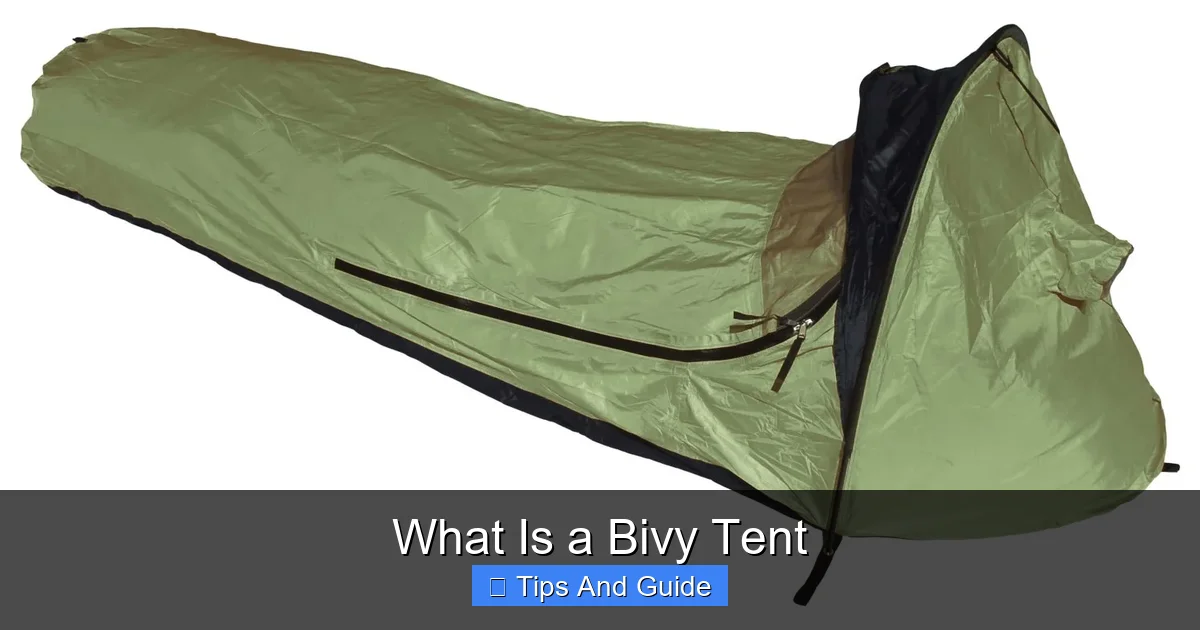
What Is a Bivy Tent
A bivy tent is a minimalist shelter designed for solo campers who prioritize weight and space savings. It offers just enough coverage to protect you from rain, wind, and insects while sleeping outdoors—without the bulk of a traditional tent.
If you’ve ever dreamed of sleeping under the stars with nothing but a thin layer between you and nature, you’ve probably wondered: *What is a bivy tent?* Well, you’re not alone. Bivy tents—short for “bivouac” tents—are the go-to shelter for minimalist adventurers, ultralight backpackers, and survivalists who value simplicity and efficiency above all else.
Unlike traditional tents with spacious interiors and room for gear, a bivy tent is essentially a waterproof, breathable cover that fits over your sleeping bag and pad. It’s like a high-tech sleeping bag cover with a little headspace for ventilation. Think of it as your personal cocoon—small, snug, and built to keep you dry and hidden from the elements. While it might not offer the comfort of a full-sized tent, its compact size and featherlight weight make it a favorite among those who live by the motto: “Go light, go fast.”
Key Takeaways
- Ultra-lightweight design: Bivy tents are built for backpackers and thru-hikers who need to minimize pack weight.
- Close-to-ground shelter: These tents sit low to the earth, offering wind resistance and stealth camping options.
- Weather protection: Quality bivies shield against rain, dew, and light snow when paired with a groundsheet.
- Compact packing: Most bivy tents fold down smaller than a water bottle, making them ideal for ultralight adventures.
- Not for luxury camping: Bivies offer minimal space—great for sleeping, but not for storing gear or sitting up.
- Best for experienced campers: They require knowledge of site selection and moisture management.
- Often used with tarps: Many campers combine bivies with a small tarp for added weather protection and ventilation.
📑 Table of Contents
What Exactly Is a Bivy Tent?
A bivy tent is a minimalist outdoor shelter designed to provide basic protection from wind, rain, and ground moisture while sleeping. Unlike conventional tents, which create an enclosed living space, a bivy (or bivvy) hugs your body and sleeping bag like a second skin. Most models are made from waterproof yet breathable fabrics such as Gore-Tex or eVent, which help manage condensation—a common challenge in small shelters.
These tents typically feature a zippered or drawstring opening that allows you to crawl in and seal yourself in. Some include a small hoop or wire frame over the head area to keep fabric off your face, improving airflow and reducing claustrophobia. Others are completely frameless, relying on the shape of your sleeping bag to maintain structure.
Origins of the Bivy Tent
The concept of bivouacking—sleeping outdoors without a full tent—dates back centuries. Soldiers, climbers, and explorers often carried minimal gear and slept in natural shelters or simple covers. The modern bivy tent evolved from these practices, gaining popularity in the 1970s and 80s among mountaineers and long-distance hikers. Today, brands like Rab, Black Diamond, and Outdoor Research offer high-performance bivies tailored for everything from alpine climbs to desert treks.
How Does a Bivy Tent Work?
At its core, a bivy tent works by creating a microclimate around your body. The waterproof outer layer repels rain and wind, while the breathable membrane allows sweat vapor to escape, reducing internal condensation. This balance is crucial—without proper ventilation, moisture builds up inside, making you cold and uncomfortable.
Most bivies are designed to be used with a sleeping pad and bag. The pad insulates you from the cold ground, while the bag provides warmth. Some campers also use a small tarp pitched above the bivy for extra rain protection and improved airflow. This combo—bivy plus tarp—is a popular setup for three-season backpacking.
Ventilation and Condensation Management
One of the biggest challenges with bivy tents is condensation. Because they’re so tight-fitting, moisture from your breath and body can accumulate inside. To combat this, many bivies feature mesh panels, zippered vents, or strategically placed breathable zones. Choosing a well-ventilated model and sleeping with the opening slightly ajar (when weather allows) can make a big difference.
Types of Bivy Tents
Not all bivy tents are created equal. Depending on your needs, you’ll find several styles on the market:
Framed Bivies
These include a small pole or wire arch over the head section. The frame keeps the fabric from touching your face and improves airflow. Great for claustrophobic campers or those who want a bit more breathing room. Examples include the Black Diamond Bivy and the MSR E-Bivy.
Frameless Bivies
Lighter and more compact, frameless models rely on the loft of your sleeping bag to create space. They’re ideal for ultralight backpackers but may feel tighter. The Rab Storm Bivy is a popular frameless option.
Expedition-Grade Bivies
Built for extreme conditions, these are made with heavy-duty materials and offer maximum weather protection. Often used in alpine or winter camping, they’re heavier but more durable. The Outdoor Research Alpine Bivy falls into this category.
Bivy Sacks vs. Bivy Tents
It’s worth noting that “bivy sack” and “bivy tent” are often used interchangeably, but there’s a subtle difference. A bivy sack is usually just a waterproof cover for your sleeping bag, while a bivy tent may include a small floor and more structure. For most users, the terms are functionally the same.
Pros and Cons of Using a Bivy Tent
Like any gear choice, bivy tents come with trade-offs. Here’s what to consider:
Advantages
- Lightweight: Most bivies weigh between 10 and 20 ounces—perfect for long hikes.
- Compact: They pack down tiny, freeing up space in your backpack.
- Stealth camping: Low profile makes them ideal for dispersed camping or urban stealth camping.
- Fast setup: No poles or complex instructions—just lay it out and crawl in.
- Wind resistance: The low silhouette handles gusty conditions better than tall tents.
Disadvantages
- Minimal space: No room to sit up or store gear inside.
- Condensation risk: Poor ventilation can lead to a damp interior.
- Less comfort: Not ideal for extended stays or bad weather.
- Setup challenges: Can be tricky to pitch on rocky or uneven terrain.
- Not for groups: Designed strictly for one person.
When to Use a Bivy Tent
A bivy tent shines in specific scenarios. It’s not for car camping or family trips, but it excels in:
Ultralight Backpacking
If every ounce counts, a bivy is hard to beat. Pair it with a lightweight sleeping bag and pad, and you’ve got a complete sleep system under two pounds. For tips on packing light, check out our guide on the best way to pack a tent for backpacking.
Fastpacking and Trail Running
These fast-moving adventures demand minimal gear. A bivy lets you cover more miles with less weight.
Winter and Alpine Camping
In snowy or high-altitude environments, a bivy’s low profile reduces wind exposure. Just make sure to use a four-season sleeping bag and consider the best way to stay warm in a tent for cold-weather tips.
Stealth and Dispersed Camping
Want to camp off the grid without drawing attention? A bivy’s small footprint and dark colors blend into the landscape.
Tips for Using a Bivy Tent Effectively
To get the most out of your bivy, follow these practical tips:
Choose the Right Sleeping Pad
A high R-value pad is essential for insulation. Closed-cell foam or inflatable pads with R-values of 4 or higher work best in cold conditions.
Use a Groundsheet
Even though many bivies have a floor, placing a lightweight tarp or footprint underneath adds extra protection from moisture and abrasion. Learn more about the best way to put a tarp under a tent.
Manage Moisture
Sleep with your face near the opening and use a buff or bandana to catch breath moisture. Avoid eating or drinking inside the bivy.
Practice Setup
Try pitching your bivy at home before heading out. It may take a few tries to get comfortable with the process, especially in the dark.
Combine with a Tarp
For added weather protection, pitch a small tarp above your bivy. This creates a vestibule for gear and improves airflow. See our guide on the best way to put a tarp over a tent for setup ideas.
Conclusion
So, what is a bivy tent? It’s more than just a tiny shelter—it’s a philosophy. A commitment to traveling light, moving fast, and embracing the raw essence of outdoor adventure. While it’s not for everyone, the bivy tent is a powerful tool for those who value efficiency, simplicity, and connection with nature.
Whether you’re thru-hiking the Pacific Crest Trail, climbing a remote peak, or just trying to shave weight from your pack, a bivy tent could be the perfect solution. It won’t offer the comforts of home, but it will get you closer to the wild—one quiet night under the stars at a time.
Frequently Asked Questions
Is a bivy tent waterproof?
Yes, most bivy tents are made from waterproof materials like Gore-Tex or silicone-coated nylon. However, seam sealing and proper setup are essential to prevent leaks during heavy rain.
Can you fit gear inside a bivy tent?
Generally, no. Bivies are designed only for you and your sleeping bag. Store gear under a tarp or in a separate dry bag outside the shelter.
Are bivy tents comfortable?
They’re snug and minimal, so comfort depends on your preferences. If you like spacious tents, a bivy may feel cramped. But for minimalists, the trade-off is worth it.
Do bivy tents have floors?
Some do, especially expedition models. Others are floorless and rely on a groundsheet for protection. Check the product specs before buying.
Can you use a bivy tent in the rain?
Yes, but ventilation is key. Use a tarp overhead and keep the bivy’s opening slightly ajar to reduce condensation while staying dry.
How do you stay warm in a bivy tent?
Use a high-quality sleeping bag rated for the conditions, a warm sleeping pad, and wear dry base layers. Avoid sweating before getting in.