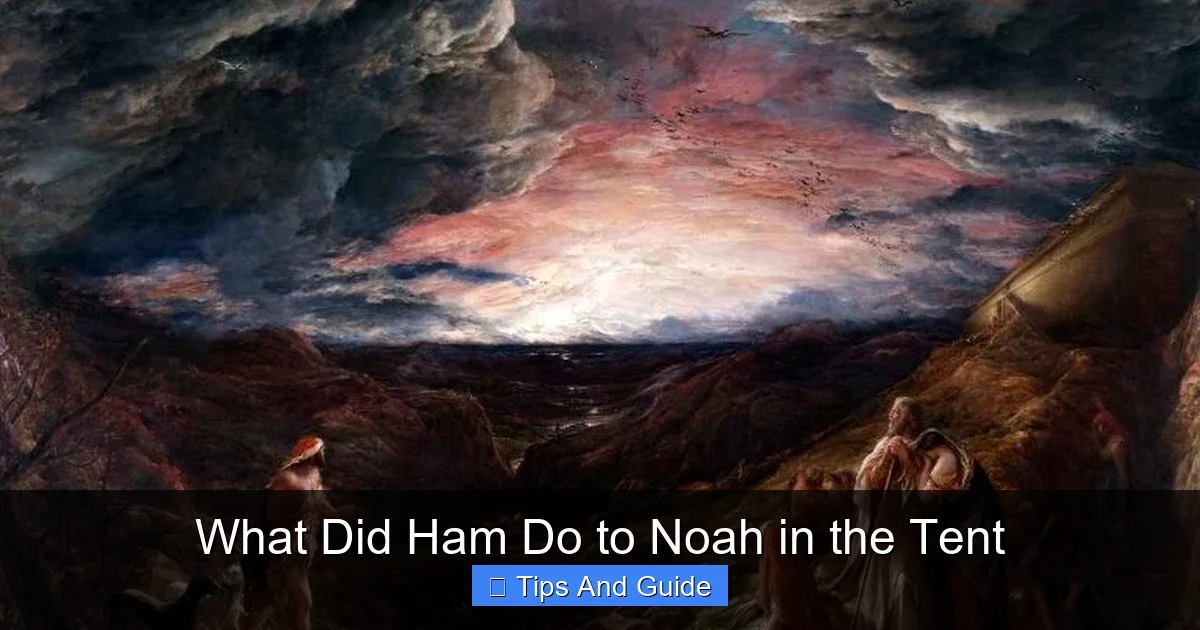
What Did Ham Do to Noah in the Tent
The story of Ham and Noah in the tent is one of the most debated passages in the Bible. It describes Noah’s drunkenness and Ham’s actions, leading to a curse on Ham’s son Canaan. While the exact act remains unclear, scholars offer various interpretations rooted in cultural and historical context.
Key Takeaways
- The incident occurred after the Great Flood: Noah planted a vineyard, drank wine, and became drunk inside his tent.
- Ham saw his father’s nakedness: The Bible says Ham “saw the nakedness of his father,” but doesn’t clearly define what that means.
- Interpretations vary widely: Some believe Ham mocked Noah, others suggest a sexual act, while many see it as a breach of respect.
- Noah cursed Canaan, not Ham: Surprisingly, Noah cursed Ham’s son Canaan, not Ham himself, which adds mystery to the story.
- Cultural context matters: Ancient Near Eastern customs emphasized honor and shame, especially regarding family dignity.
- Modern scholars reject racist misuse: The “Curse of Ham” has been wrongly used to justify slavery—this is not supported by biblical scholarship.
- The story teaches about respect and consequences: Regardless of interpretation, the tale highlights the importance of honoring parents and facing repercussions for disrespect.
📑 Table of Contents
Introduction to the Story of Ham and Noah
After the Great Flood, Noah and his family stepped onto dry land, grateful to have survived God’s judgment on a corrupt world. They began rebuilding their lives, and Noah—once a righteous man—took up farming. He planted a vineyard, made wine, and one day drank too much. The Bible tells us he became drunk and lay uncovered inside his tent. This moment of vulnerability set the stage for a confusing and controversial event involving his son Ham.
What happened next has puzzled readers for centuries. Ham entered the tent, saw his father in this state, and instead of covering him, he went outside and told his brothers, Shem and Japheth. Their response was very different—they walked backward into the tent with a garment to cover their father without looking at him. When Noah woke up and learned what had happened, he pronounced a curse—not on Ham, but on Ham’s son, Canaan. This strange chain of events raises many questions: What exactly did Ham do? Why was he punished through his son? And what can we learn from this ancient story today?
The Biblical Text: Genesis 9:20–27
Let’s look closely at the original passage in Genesis 9:20–27. It reads:
> “Noah began as a farmer and planted a vineyard. He drank some of the wine and became drunk and lay uncovered inside his tent. Ham, the father of Canaan, saw the nakedness of his father and told his two brothers outside. But Shem and Japheth took a garment and laid it across their shoulders; then they walked in backward and covered their father’s nakedness. Their faces were turned the other way so that they would not see their father’s nakedness. When Noah awoke from his wine and found out what his youngest son had done to him, he said, ‘Cursed be Canaan! The lowest of servants will he be to his brothers.’ He also said, ‘Blessed be the Lord, the God of Shem! May Canaan be the servant of Shem. May God extend Japheth’s territory; may Japheth live in the tents of Shem, and may Canaan be the servant of Japheth.’”
Notice the key phrase: “saw the nakedness of his father.” This wording is unusual. In Hebrew, “seeing nakedness” can sometimes refer to sexual violation, especially in Levitical laws (Leviticus 18). However, the text doesn’t explicitly say Ham touched Noah or committed a sexual act. It simply says he saw and told his brothers.
What Does “Saw the Nakedness” Really Mean?
Literal vs. Figurative Interpretation
One common view is that Ham literally saw Noah naked and failed to show proper respect. In ancient Near Eastern culture, exposing someone’s nakedness—especially a parent—was considered deeply shameful. By not covering his father and instead sharing the news with his brothers, Ham may have been mocking or dishonoring Noah.
Another interpretation suggests that “seeing nakedness” was a euphemism for sexual misconduct. Some Jewish and Christian traditions have proposed that Ham either castrated Noah or engaged in a sexual act with him. However, there’s no direct evidence in the text to support this, and most modern scholars consider it speculative.
The Role of Cultural Honor
In biblical times, family honor was everything. A son’s duty was to protect his father’s dignity—even in private moments. Shem and Japheth demonstrated this by covering Noah without looking, preserving his honor. Ham’s actions, by contrast, appeared careless or disrespectful. Even if he didn’t do anything physically wrong, his failure to act with discretion could have been seen as a serious moral failing.
This cultural lens helps explain why Noah reacted so strongly. The offense wasn’t just about nudity—it was about betrayal of familial duty.
Why Was Canaan Cursed Instead of Ham?
This is one of the most puzzling aspects of the story. If Ham did something wrong, why did Noah curse his grandson Canaan?
Possible Explanations
One theory is that Canaan represented the future lineage that would oppose Israel. Later in the Bible, the Canaanites are portrayed as enemies of the Israelites. By cursing Canaan, Noah may have been foreshadowing future conflicts—not punishing an innocent child, but declaring a prophetic judgment on a people group.
Another idea is that ancient Near Eastern cultures often held entire families or tribes responsible for an individual’s actions. So while Ham committed the act, the consequences extended to his descendants.
However, many theologians today caution against taking the curse literally or using it to justify oppression. The Bible never endorses collective punishment in the way this passage might seem to suggest.
Modern Rejection of Racist Interpretations
Historically, some misused the “Curse of Ham” to justify the enslavement of African peoples, claiming that Black Africans were descendants of Ham and therefore destined to be servants. This idea is completely false and has been thoroughly debunked by biblical scholars. The Bible does not support racism, and the curse on Canaan was never intended as a racial decree.
In fact, Canaan was associated with the land of Canaan (modern-day Israel/Palestine), not Africa. The misuse of this passage is a tragic example of how scripture can be twisted to serve harmful agendas.
Lessons and Applications for Today
Despite its ambiguity, the story of Ham and Noah offers valuable insights.
Respect for Parents and Elders
The core lesson is clear: children should honor their parents, even when those parents are flawed or vulnerable. Noah wasn’t perfect—he got drunk—but that didn’t give Ham the right to disrespect him. We all make mistakes, but how we respond to others’ failures defines our character.
This principle applies beyond family. In workplaces, friendships, and communities, showing grace and discretion when someone is struggling builds trust and respect.
The Power of Discretion
Shem and Japheth didn’t just cover Noah—they did it carefully, without looking. Their actions reflect wisdom and humility. In our digital age, where private moments can become public instantly, this lesson is more relevant than ever. Think before you share. Ask: “Will this protect someone’s dignity—or expose it?”
Consequences Extend Beyond the Individual
Noah’s curse on Canaan reminds us that our choices can affect others—sometimes generations down the line. While we shouldn’t blame children for their parents’ sins, we should recognize that our actions ripple outward. This calls for greater responsibility in how we live and lead.
Common Misunderstandings and Clarifications
Many people assume the story is about race, sexuality, or divine punishment in a simplistic way. But reducing it to any single interpretation misses the complexity.
For example, some claim the story condemns homosexuality. But there’s no clear evidence Ham committed a same-sex act. Others say it’s about drunkenness—but Noah isn’t condemned for drinking, only for losing control. The focus is on Ham’s response, not Noah’s mistake.
It’s also important to remember that this is one brief episode in a much larger biblical narrative. It doesn’t define Noah’s legacy or Ham’s entire life. Both men appear elsewhere in scripture without further mention of this event.
Conclusion: Understanding Through Context and Compassion
So, what did Ham do to Noah in the tent? The Bible doesn’t give us all the details—and that’s okay. Sometimes, ancient stories leave room for reflection rather than rigid answers. What matters most is the underlying message: honor your family, act with discretion, and recognize that your choices have consequences.
Whether you’re reading this for spiritual insight, historical curiosity, or personal growth, approach the story with humility. Avoid jumping to conclusions or using it to judge others. Instead, let it remind you to treat people—especially those in vulnerable moments—with kindness and respect.
And if you’re ever camping in a tent (yes, really!), maybe think twice before sharing embarrassing stories around the campfire. After all, even the best tent setup in the rain won’t protect you from awkward family moments!
For more tips on respectful outdoor living—like how to tent camp in the winter or how to stay cool in a tent—check out our practical guides. Because whether you’re in a biblical tent or a modern dome, dignity and discretion go a long way.
Frequently Asked Questions
What exactly did Ham do to Noah?
The Bible says Ham “saw the nakedness of his father” but doesn’t specify the act. Most scholars believe he either mocked Noah or failed to cover him respectfully, violating cultural norms of honor.
Was Ham sexually assaulted or did he assault Noah?
There’s no clear evidence of a sexual act. Some ancient traditions suggest it, but modern scholarship generally rejects this due to lack of textual support and potential bias.
Why did Noah curse Canaan instead of Ham?
Noah may have been prophesying about future conflicts with the Canaanites. Ancient cultures sometimes linked family destinies, but the curse shouldn’t be read as literal or racial punishment.
Can this story justify racism or slavery?
Absolutely not. The “Curse of Ham” has been misused historically, but biblical scholars agree it was never intended as a racial decree. Such interpretations are false and harmful.
What can we learn from Shem and Japheth’s actions?
They showed respect by covering Noah without looking. Their example teaches us to protect others’ dignity—especially in private or vulnerable moments.
Is the story relevant today?
Yes. It reminds us to honor family, act with discretion, and consider how our choices affect others—values that remain important in any era.