Why Tent Camping Is Better Than Rv
Tent camping offers a deeper connection to nature, lower costs, and unmatched flexibility compared to RV travel. It’s simpler, more sustainable, and lets you truly unplug and explore the outdoors on your terms.
Key Takeaways
- Closer to nature: Tent camping puts you right in the heart of the wilderness, with sounds, smells, and views you can’t get in an RV.
- More affordable: No massive upfront cost or fuel bills—tent camping is budget-friendly from start to finish.
- Greater flexibility: You can camp in remote, scenic spots that RVs simply can’t reach.
- Easier to maintain: No mechanical issues, plumbing, or electrical systems to worry about.
- Eco-friendly travel: Tent camping has a smaller environmental footprint than driving and powering a large RV.
- Simpler setup: Modern tents are quick to pitch, making it easy to arrive and relax.
- Better for bonding: Without distractions like TVs or Wi-Fi, tent camping encourages real conversation and connection.
📑 Table of Contents
- Why Tent Camping Is Better Than RV: The Real Outdoor Experience
- You’re Closer to Nature—Literally
- It’s Way More Affordable
- More Freedom to Explore Remote Locations
- Simpler, Quieter, and More Sustainable
- Better for Family Bonding and Digital Detox
- Easy Setup and Portability
- Conclusion: Choose Adventure Over Amenities
Why Tent Camping Is Better Than RV: The Real Outdoor Experience
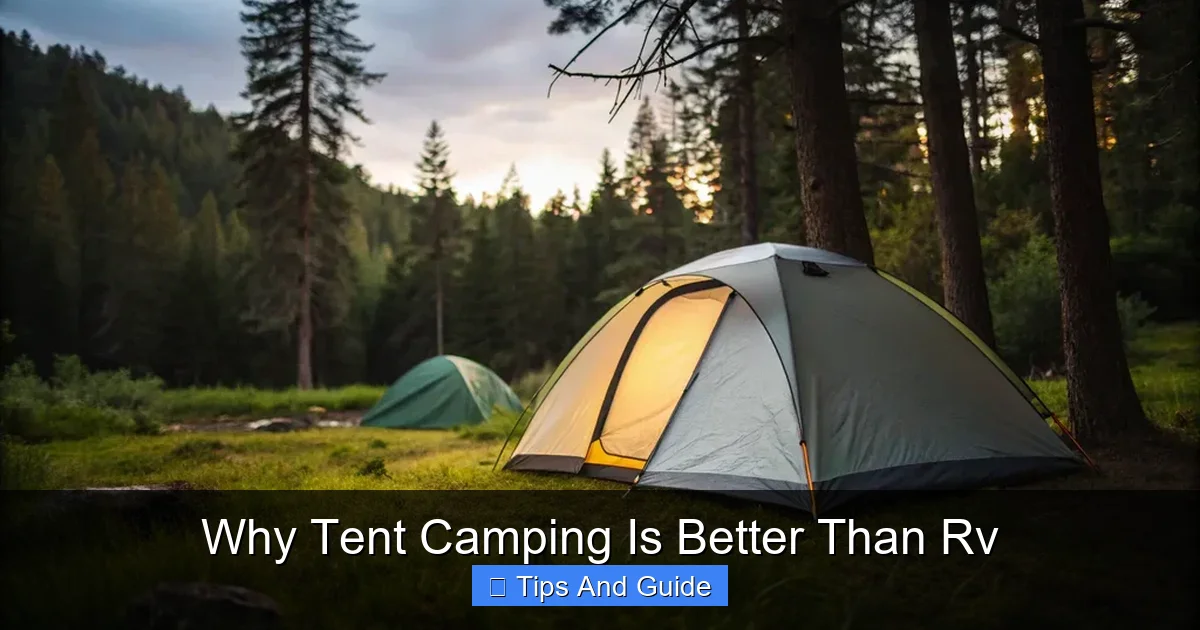
Imagine waking up to the sound of birds chirping, the smell of pine trees, and sunlight filtering through your tent walls. No engine noise, no generator humming—just peace. That’s the magic of tent camping. While RVs offer comfort and convenience, they often keep you insulated from the very nature you’re trying to experience. Tent camping, on the other hand, brings you closer to the outdoors in a way no motorhome ever can.
More people are rediscovering the joy of tent camping, not because they can’t afford an RV, but because they want a more authentic adventure. Whether you’re a weekend warrior or a seasoned backpacker, sleeping in a tent reconnects you with the simplicity and beauty of the wild. It’s not about roughing it—it’s about choosing a different kind of comfort: one rooted in nature, not technology.
You’re Closer to Nature—Literally
One of the biggest reasons tent camping beats RV life is proximity. When you’re in a tent, you’re inches from the ground, surrounded by trees, rocks, and wildlife. You hear every rustle in the bushes, feel the morning dew on your boots, and fall asleep under a sky full of stars. In an RV, you’re sealed inside a metal box, often parked in a crowded campground with paved sites and electrical hookups.
Feel the Ground Beneath Your Feet
There’s something grounding—literally—about setting up camp on soft earth or forest floor. You can pitch your tent near a quiet lake, under a canopy of trees, or on a hilltop with a view. Many of the most beautiful camping spots are only accessible to those willing to carry their gear a short distance. RVs can’t navigate narrow trails or steep inclines, so you miss out on these hidden gems.
Wake Up with the Wilderness
Ever woken up to a deer grazing just 20 feet from your tent? Or listened to owls calling as the sun sets? These moments happen more often when you’re not buffered by walls and windows. Tent camping lets you experience the rhythm of nature firsthand. For a truly immersive experience, check out the best all-weather camping tent that keeps you dry and cozy without sacrificing that open-air feel.
It’s Way More Affordable
Let’s talk money. RVs are expensive—not just to buy, but to maintain, fuel, and store. The average RV costs tens of thousands of dollars, and that’s before you factor in insurance, repairs, and campground fees. Tent camping, by contrast, is incredibly budget-friendly.
Lower Upfront Costs
A quality tent can cost anywhere from $100 to $400, depending on size and features. Compare that to the $20,000+ price tag of even a modest RV. You can outfit a family of four with sleeping bags, a stove, and basic gear for less than the cost of one month’s RV payment.
Cheaper to Travel
RVs guzzle gas. A large motorhome might get 6–10 miles per gallon, meaning a weekend trip can cost $100 or more in fuel alone. With a tent, you drive your regular car—much more fuel-efficient—and park it right next to your campsite. Plus, many tent sites cost $10–$25 per night, while RV sites with hookups can run $50 or more.
No Hidden Maintenance Fees
RVs come with a long list of potential problems: plumbing leaks, electrical issues, tire blowouts, and engine troubles. Tents? If it rains, you dry it off. If a pole breaks, you replace it. Simple. For a durable, wallet-friendly option, consider the best affordable camping tent that delivers performance without the premium price.
More Freedom to Explore Remote Locations
One of the greatest joys of camping is discovering places off the beaten path. Unfortunately, RVs are limited by size, weight, and road conditions. Many scenic areas—like mountain ridges, desert washes, or lakeside clearings—are inaccessible to large vehicles.
Access to Backcountry and Dispersed Sites
Tent campers can reach dispersed camping areas on public lands, where you can camp for free and enjoy solitude. These spots often have no facilities, which means no crowds and no noise. Whether you’re hiking into a national forest or setting up near a quiet stream, tent camping opens doors that RVs can’t.
Perfect for Bike and Car Camping
Love cycling? There’s nothing like arriving at a campsite after a long ride, pitching your tent, and enjoying a well-earned rest. The best bike tent for camping is lightweight, compact, and designed for riders who want to travel light. Similarly, car campers can pack more gear without worrying about towing capacity or parking space.
Simpler, Quieter, and More Sustainable
RVs are complex machines. They have generators, water tanks, refrigerators, and air conditioners—all of which require power, maintenance, and resources. Tent camping strips away the excess and focuses on what really matters: rest, relaxation, and reconnection.
Less Noise, More Peace
Ever tried to sleep while your neighbor’s RV generator runs all night? It’s not exactly peaceful. Tent campers don’t rely on noisy equipment. Instead, you cook on a small stove, use lanterns or headlamps, and enjoy the natural sounds around you. It’s quiet, calming, and refreshing.
Eco-Friendly Travel
Tent camping has a much smaller carbon footprint. No diesel engines, no plastic waste from disposable RV supplies, and no need for constant electricity. You leave minimal impact and take only memories. Plus, many tent campers embrace Leave No Trace principles, ensuring the wilderness stays pristine for future visitors.
Better for Family Bonding and Digital Detox
Let’s be honest: RVs often come with TVs, Wi-Fi, and video game consoles. While that might sound nice, it defeats the purpose of getting away from it all. Tent camping forces you to unplug—literally and figuratively.
Quality Time Without Distractions
Without screens to distract you, families actually talk. They play cards, tell stories, go on hikes, and stargaze together. Kids learn to appreciate nature, build fires, and solve problems as a team. These are the memories that last a lifetime.
Encourages Creativity and Adventure
When you’re not glued to a tablet, you start exploring. You might build a fort, go fishing, or try identifying birds. Tent camping sparks curiosity and creativity in ways that a climate-controlled RV never could.
Easy Setup and Portability
Modern tents are designed for quick, hassle-free setup. Many pop-up or instant tents can be pitched in under five minutes. That means less time wrestling with poles and more time enjoying your surroundings.
Lightweight and Packable
Whether you’re car camping or backpacking, today’s tents are lighter and more compact than ever. You can easily fit a 4-person tent in your trunk along with coolers, chairs, and cooking gear. And if you’re heading to the beach, the best beach tent camping options offer sun protection and wind resistance in one portable package.
No Need for Level Ground or Hookups
RVs require level parking, water connections, and electrical outlets. Tents? Just find a flat-ish spot, clear the rocks, and you’re good to go. You can camp on sand, grass, or even a wooden platform. Flexibility is key.
Conclusion: Choose Adventure Over Amenities
Tent camping isn’t about giving up comfort—it’s about choosing a different kind of comfort. One that comes from fresh air, starry skies, and the sound of a crackling fire. While RVs have their place for long-term travel or those with mobility needs, tent camping offers something deeper: a genuine connection to the outdoors.
It’s cheaper, quieter, more flexible, and far more rewarding. You’ll see more, experience more, and remember more. So next time you’re planning a getaway, consider leaving the RV at home. Grab your tent, pack your sense of adventure, and head for the hills. The wilderness is waiting—and it’s better up close.
Frequently Asked Questions
Is tent camping safe in bad weather?
Yes, with the right gear. Choose a high-quality, waterproof tent and practice setting it up before your trip. Always check the weather forecast and avoid camping in flood-prone areas during storms.
Do I need special equipment for tent camping?
Basic gear includes a tent, sleeping bag, sleeping pad, stove, and lighting. Start simple and add accessories as you gain experience. The best accessories for tent camping can enhance comfort without complicating your setup.
Can families comfortably tent camp?
Absolutely. Many families enjoy tent camping for its bonding opportunities and affordability. Look for spacious, easy-to-pitch tents like the best big family camping tent to ensure everyone has room to sleep and store gear.
How do you stay warm while tent camping?
Use a sleeping bag rated for the season, add a sleeping pad for insulation, and wear warm layers. For extra warmth, check out the best way to stay warm tent camping for proven tips and gear recommendations.
Is tent camping better for the environment?
Yes. Tent camping uses fewer resources, produces less waste, and has a smaller carbon footprint than RV travel. It also encourages low-impact practices like packing out trash and minimizing campfire use.
Can you camp in a tent year-round?
With the right preparation, yes. Winter camping requires a four-season tent, insulated sleeping gear, and knowledge of cold-weather safety. Start with mild seasons and work your way up to colder conditions.