What to Do with Tent After Camping
After your camping trip, proper tent care is key to extending its life and ensuring it’s ready for the next adventure. From cleaning and drying to storing and inspecting, a few simple steps can prevent mold, mildew, and damage. Follow this guide to keep your tent in top shape year after year.
So, you’ve just returned from an amazing camping trip—fresh air, starry skies, and maybe a few marshmallows roasted over the fire. You’re tired, happy, and ready to unpack. But before you toss your tent into the garage and forget about it, pause for a moment. What you do with your tent after camping can make a huge difference in how long it lasts and how well it performs next time.
Many campers make the mistake of simply folding up their tent and shoving it into its bag, only to find mold, stuck zippers, or torn fabric on their next adventure. That’s why post-camping care is just as important as setting up camp in the first place. Taking a little extra time now saves you money, stress, and disappointment down the road. Think of it as giving your tent a well-deserved spa day after a long weekend in the wild.
In this guide, we’ll walk you through exactly what to do with your tent after camping—step by step. Whether you’re a weekend warrior or a seasonal camper, these tips will help you keep your gear in peak condition. From cleaning and drying to storing and maintaining, we’ve got you covered. Let’s dive in and make sure your tent is ready for the next great escape.
Key Takeaways
- Clean your tent thoroughly: Remove dirt, mud, and debris to prevent fabric damage and odors.
- Dry it completely before storing: Even a little moisture can lead to mold and mildew over time.
- Inspect for damage: Check zippers, seams, poles, and fabric for wear and tear.
- Store in a cool, dry place: Avoid attics, garages, or damp basements to protect the material.
- Use a breathable storage bag: Never store your tent in its stuff sack long-term—it can trap moisture.
- Waterproof when needed: Reapply waterproofing treatment if the tent feels less water-resistant.
- Label and organize gear: Keep tent components together for easy setup next time.
📑 Table of Contents
1. Clean Your Tent Right Away
One of the most important things to do after camping is to clean your tent. Dirt, sand, pine needles, and food crumbs might seem harmless, but they can damage the fabric over time. Dirt particles are abrasive and can wear down the coating that keeps your tent waterproof. Plus, leftover food can attract pests like mice or insects, even when stored at home.
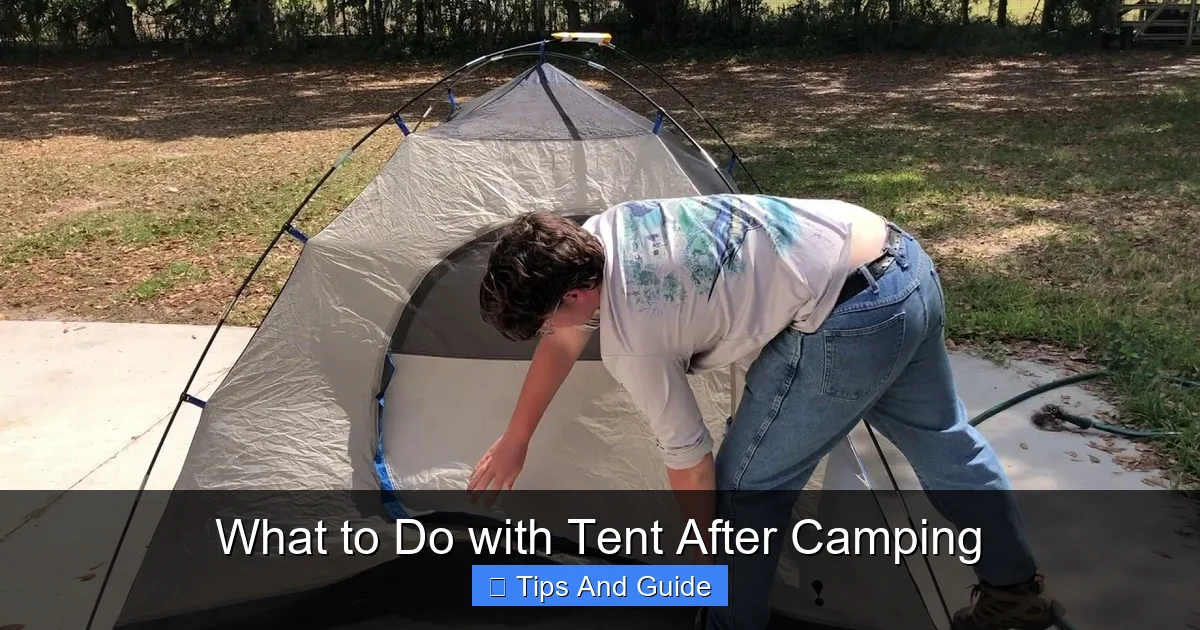
Start by shaking out the tent to remove loose debris. Use a soft brush or cloth to gently wipe down the floor and walls. If there’s mud or stubborn stains, a mild soap and water solution works well—just avoid harsh detergents or bleach, which can break down the tent’s protective layers. For a deeper clean, check out our guide on the best way to clean a tent after camping.
Spot Cleaning vs. Full Wash
Most of the time, spot cleaning is enough. Focus on high-contact areas like the floor, door, and vestibule. But if your tent got really dirty—say, from a muddy trail or a spilled drink—you might need a full wash. Use a bathtub or large basin with lukewarm water and a small amount of mild soap. Rinse thoroughly to remove all soap residue, which can attract dirt later.
What Not to Do
Never use a washing machine or dryer. The agitation and heat can ruin the tent’s waterproof coating and weaken the seams. Also, avoid scrubbing too hard with abrasive tools like steel wool or stiff brushes. Gentle care goes a long way.
2. Dry Your Tent Completely
Moisture is the enemy of tents. Even a small amount of dampness can lead to mold, mildew, and unpleasant odors. That’s why drying your tent is non-negotiable—even if you’re tired and just want to go to bed.
Hang your tent up in a shaded, well-ventilated area. Direct sunlight can weaken the fabric and fade colors, so avoid leaving it in full sun for too long. Use clotheslines, a drying rack, or even the back of a chair to drape it over. Make sure both the inner and outer layers are exposed to air.
How Long Should It Dry?
This depends on the weather. On a warm, breezy day, a few hours might be enough. In humid or cool conditions, it could take a full day or more. The key is patience—don’t rush this step. If you store a damp tent, you’re basically inviting mold to move in.
Pro Tip: Use a Fan
If you’re drying indoors, place a fan nearby to speed up airflow. This is especially helpful in basements or garages where air circulation is limited.
3. Inspect for Damage
Once your tent is clean and dry, take a close look at every part. This is your chance to catch small issues before they become big problems.
Start with the fabric. Look for tears, holes, or thinning areas, especially around the floor and stress points like door corners. Check the seams—are they still sealed? If you see peeling or cracking, it might be time to re-seal them.
Check the Zippers
Zippers are often the first thing to fail. Run them back and forth a few times to make sure they move smoothly. If they’re sticking or misaligned, gently clean them with a soft brush and consider using a zipper lubricant. Avoid WD-40—it can attract dirt. Instead, use a product designed for outdoor gear.
Examine the Poles and Stakes
Look for bends, cracks, or missing parts in the tent poles. Aluminum poles can dent, while fiberglass ones may snap. Stakes should be straight and free of rust. If you’re missing a stake or two, now’s the time to replace them.
Don’t Forget the Rainfly
The rainfly takes a lot of abuse from wind and rain. Check for tears, stretched fabric, or damaged attachment points. If it’s looking worn, consider replacing it or reinforcing weak spots with repair tape.
4. Store Your Tent Properly
Storing your tent correctly is just as important as cleaning it. Many people make the mistake of stuffing their tent back into its original stuff sack and tossing it in the attic. This can crush the fabric, trap moisture, and shorten the tent’s lifespan.
Instead, store your tent loosely in a large, breathable bag or a cotton storage sack. This allows air to circulate and prevents creases from becoming permanent. Avoid plastic bags—they trap moisture and can cause condensation.
Choose the Right Location
Store your tent in a cool, dry place away from direct sunlight. Basements can be damp, and attics get extremely hot, both of which are bad for synthetic materials. A closet or under the bed is ideal.
Keep Components Together
Use a small bag or labeled container to keep tent poles, stakes, guylines, and repair kits together. This makes setup much easier next time and prevents lost parts. You can even attach a checklist to the storage bag so you never forget anything.
Revisit Seasonally
Every few months, take your tent out and air it out. This helps prevent musty smells and gives you a chance to inspect it again. It’s also a good time to reapply waterproofing if needed.
5. Maintain Waterproofing
Over time, the waterproof coating on your tent can wear off, especially if you camp frequently or in wet conditions. If you notice water beading less or the fabric feeling damp, it’s time to re-waterproof.
There are two main types of treatments: sprays and wash-in formulas. Sprays are easier to apply and work well for spot treatments. Wash-in products require a full wash but provide more even coverage.
How to Apply Waterproofing
Start with a clean, dry tent. Apply the treatment evenly, following the manufacturer’s instructions. Let it dry completely before storing. For best results, reapply every season or after heavy use.
For detailed steps, check out our guide on how to waterproof a camping tent.
Test It Out
Before your next trip, do a quick water test. Spray some water on the fabric and see if it beads up. If it soaks in, you may need another application.
6. Prepare for the Next Adventure
Once your tent is clean, dry, and stored, take a few minutes to get ready for your next trip. Pack your gear in an organized way—tent, sleeping bag, cooking supplies—all in labeled bags or bins. This saves time and stress when you’re eager to hit the road.
Consider creating a camping checklist that includes tent care items: extra stakes, repair tape, a small brush, and a waterproofing spray. That way, you’re always prepared.
Bonus: Make Tent Camping More Comfortable
While you’re at it, think about how to make your next trip even better. Add a groundsheet for extra floor protection, use a footprint to reduce wear, or upgrade your sleeping pad for better comfort. For ideas, see our article on how to make tent camping more comfortable.
Conclusion
Taking care of your tent after camping isn’t just about cleanliness—it’s about respect for your gear and investment. A little effort now ensures your tent stays reliable, weatherproof, and ready for years of adventures. From cleaning and drying to inspecting and storing, each step plays a vital role in extending your tent’s life.
Remember, a well-maintained tent is a happy tent. And a happy tent means better nights under the stars, fewer surprises in the rain, and more time enjoying nature—not fixing gear. So the next time you return from the great outdoors, don’t just pack it away. Give your tent the care it deserves. Your future self (and your next camping trip) will thank you.
Frequently Asked Questions
Can I store my tent wet if I’m in a hurry?
No, you should never store a tent while it’s wet. Even a small amount of moisture can lead to mold, mildew, and fabric damage over time. Always dry it completely before packing it away.
How often should I clean my tent?
Clean your tent after every trip, especially if it’s been exposed to dirt, sand, or food. A quick shake and wipe-down is usually enough, but deep clean it a few times a year or after particularly messy outings.
Can I use a regular laundry detergent to wash my tent?
No, avoid regular detergents as they can strip the waterproof coating. Use a mild, non-detergent soap designed for outdoor gear or a specialized tent cleaner.
Is it okay to store my tent in its stuff sack?
Only for short-term transport. Long-term storage in a stuff sack can compress the fabric and trap moisture. Use a larger, breathable storage bag instead.
How do I remove mold from my tent?
Mix a solution of water and white vinegar (1:1), gently scrub the affected area, then rinse and dry thoroughly. For stubborn mold, check out our guide on how to remove mold from a camping tent.
Do I need to waterproof my tent every year?
It depends on usage. If you camp frequently or in wet conditions, reapply waterproofing once a year. For occasional campers, every two years may be enough—just test the fabric regularly.