What Size Generator Do I Need for Tent Camping
Choosing the right size generator for tent camping ensures you have reliable power without unnecessary weight, noise, or cost. This guide breaks down how to calculate your power needs, understand wattage requirements, and pick a generator that fits your camping style—whether you’re running a small fan or a portable air conditioner.
Key Takeaways
- Calculate total wattage: Add up the starting and running watts of all devices you plan to use to avoid overloading your generator.
- Start small: Most tent campers only need 1,000–2,000 watts for essentials like lights, phones, and small appliances.
- Prioritize quiet operation: Inflatable tents and peaceful campsites demand low-decibel generators to avoid disturbing wildlife or neighbors.
- Consider inverter generators: They’re fuel-efficient, quieter, and provide clean power for sensitive electronics like phones and laptops.
- Check tent compatibility: Ensure your generator setup works safely with your shelter—especially if using an air-up tent or portable AC unit.
- Fuel type matters: Gas, propane, or solar—each has pros and cons for weight, availability, and runtime in remote areas.
- Safety first: Always use generators outdoors, away from tents, to prevent carbon monoxide poisoning.
📑 Table of Contents
- Understanding Your Power Needs While Tent Camping
- How to Calculate the Right Generator Size
- Recommended Generator Sizes for Different Camping Styles
- Why Inverter Generators Are Ideal for Tent Camping
- Safety Tips for Using Generators While Tent Camping
- Alternative Power Options to Consider
- Final Thoughts: Matching Your Generator to Your Camping Style
Understanding Your Power Needs While Tent Camping
Tent camping is all about getting back to nature—but that doesn’t mean you have to sacrifice every modern convenience. Whether you’re charging your phone, running a small fan, or powering a portable fridge, a generator can make your outdoor experience more comfortable. But here’s the catch: you don’t want to lug around a bulky, noisy machine that’s overkill for your needs.
The key is knowing exactly what size generator you need for tent camping. Too small, and you’ll trip breakers or damage electronics. Too big, and you’re wasting fuel, money, and backpack space. The good news? Most campers only need a fraction of the power they think they do. With a little planning, you can find a lightweight, efficient generator that keeps your essentials running without turning your campsite into a construction zone.
How to Calculate the Right Generator Size
Figuring out the correct generator size starts with understanding two types of wattage: starting watts and running watts. Starting watts are the extra power a device needs to kick on—like when a mini-fridge compressor starts. Running watts are what it uses to keep operating.
Step 1: List Your Devices
Start by writing down every electronic item you plan to use. Common tent camping gear includes:
- LED lanterns or string lights (5–20 watts)
- Phone or tablet charger (10–20 watts)
- Portable fan (30–60 watts)
- Mini fridge or cooler with compressor (100–400 watts)
- Laptop (50–100 watts)
- Small coffee maker (600–1,000 watts)
- Portable air conditioner (500–1,500 watts)
Step 2: Add Up the Wattage
Add the running watts of all devices you’ll use at the same time. Then, identify the device with the highest starting wattage and add that to your total. For example:
- LED lights: 15W (running)
- Phone charger: 15W
- Portable fan: 50W
- Mini fridge: 150W running, 400W starting
Total running watts: 230W. Highest starting surge: 400W. So, you need a generator that can handle at least 630 watts (230 + 400).
Step 3: Choose a Generator with Buffer
Always add a 10–20% buffer to your total. This prevents overloading and extends the life of your generator. In our example, a 750–800 watt generator would be ideal.
Recommended Generator Sizes for Different Camping Styles
Not all tent camping trips are the same. Your generator needs will vary based on how many people are in your group, how long you’re staying, and what comforts you’re bringing along.
Solo or Minimalist Camping (500–1,000 Watts)
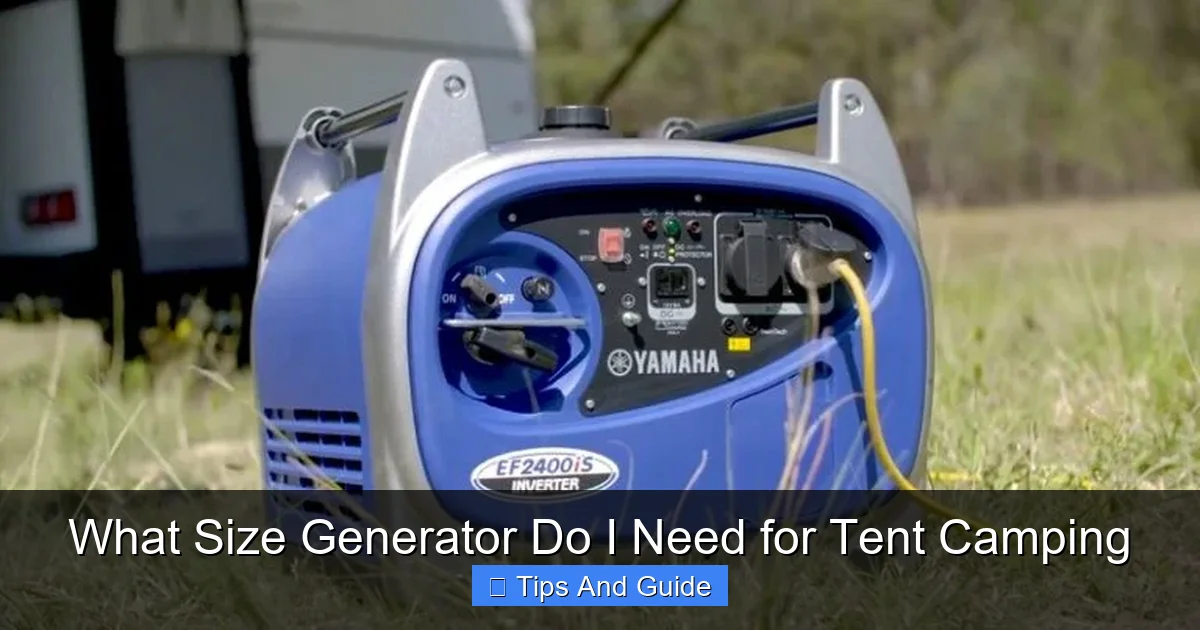
If you’re traveling light—just charging your phone, using a headlamp, and maybe running a small fan—a 500–1,000 watt inverter generator is perfect. These models are compact, lightweight (often under 30 pounds), and quiet. Brands like Honda and Yamaha offer excellent options in this range.
Weekend Couples Trip (1,000–2,000 Watts)
For two people wanting a few extra comforts—like a mini fridge, coffee maker, or portable speaker—a 1,500-watt generator is a sweet spot. It’s still portable enough to carry in a car trunk and can run multiple devices simultaneously. This size also works well if you’re using an air mattress with a pump that needs occasional topping off.
Family or Extended Camping (2,000–3,500 Watts)
Families or groups staying a week or more might want more power. Think portable air conditioners, larger fridges, or even a small TV. A 2,500–3,500 watt generator can handle these loads, but remember: these are heavier and louder. Only go this route if you truly need the power.
Why Inverter Generators Are Ideal for Tent Camping
When it comes to tent camping, not all generators are created equal. Traditional portable generators are loud, inefficient, and can damage sensitive electronics. That’s where inverter generators shine.
Clean, Stable Power
Inverter generators produce “clean” electricity with low total harmonic distortion (THD), usually under 3%. This is safe for phones, laptops, cameras, and other gadgets. Traditional generators can have THD over 20%, which may harm your devices over time.
Quiet Operation
Most inverter generators run at 50–60 decibels—about as loud as a normal conversation. This is crucial when you’re camping in quiet forests or near other campers. Some models even have “eco mode” that reduces noise and fuel use when power demand is low.
Fuel Efficiency and Portability
Inverter generators are designed to adjust engine speed based on load, saving fuel and runtime. Many models can run 6–10 hours on a single tank. Plus, they’re compact and often come with handles or wheels for easy transport.
Safety Tips for Using Generators While Tent Camping
Power is great—but safety is non-negotiable. Generators can be dangerous if used improperly, especially in outdoor settings.
Never Run a Generator Inside a Tent
Carbon monoxide (CO) is a silent killer. Never operate a generator inside your tent, RV, or even near an open window. Always place it at least 20 feet away from your campsite, with the exhaust pointing away from people and shelters.
Use Proper Extension Cords
Use heavy-duty, outdoor-rated extension cords with a gauge thick enough for your wattage. Undersized cords can overheat and cause fires. Look for cords labeled “12/3” or “10/3” for higher-wattage devices.
Ground Your Generator (If Required)
Some generators need to be grounded to prevent electrical shock. Check your manual—especially if you’re using it in wet conditions.
Store Fuel Safely
Keep extra fuel in approved containers, away from heat sources and out of reach of children. Never refuel a hot generator—always let it cool first.
Alternative Power Options to Consider
While generators are reliable, they’re not the only way to power your tent camping trip. Depending on your needs, you might consider alternatives:
Solar Power Stations
Portable solar generators (like Jackery or EcoFlow) combine solar panels with battery storage. They’re silent, emission-free, and perfect for recharging phones, lights, and small fans. However, they struggle with high-wattage devices like air conditioners and may take hours to recharge.
Power Inverters for Your Car
If you’re car camping, a 300–1,000 watt power inverter plugged into your vehicle’s cigarette lighter can charge devices or run small appliances. Just don’t drain your car battery—run the engine periodically.
Battery Packs and Power Banks
For ultra-light campers, high-capacity power banks (20,000mAh or more) can charge phones, GPS units, and LED lights for days. They’re cheap, lightweight, and require no fuel.
Final Thoughts: Matching Your Generator to Your Camping Style
Choosing the right size generator for tent camping isn’t about getting the biggest or most powerful model—it’s about getting the right one. Start by listing your devices, calculating your wattage needs, and prioritizing quiet, efficient operation. For most campers, a 1,000–2,000 watt inverter generator strikes the perfect balance between power and portability.
And don’t forget to consider your shelter. If you’re using a best air up tent for camping or relying on a portable AC unit, make sure your generator can handle the load. With the right setup, you can enjoy the beauty of the outdoors without giving up the comforts that make camping fun.
Frequently Asked Questions
What size generator do I need to run a small air conditioner in my tent?
Most portable air conditioners for tents require 500–1,500 starting watts and 300–800 running watts. You’ll need at least a 1,500–2,000 watt generator to safely power one, especially if other devices are running.
Can I use a generator with an inflatable tent?
Yes, but ensure the generator is placed safely away from the tent to avoid CO exposure. Also, check that your air pump or mattress doesn’t overload the generator—most use under 100 watts.
Is a 1,000-watt generator enough for tent camping?
Absolutely—if you’re only running lights, chargers, a fan, and maybe a small fridge. It’s ideal for solo or couple camping with minimal power needs.
Do I need a special extension cord for my generator?
Yes. Use a heavy-duty, outdoor-rated cord with the correct gauge (12/3 or 10/3 for high-wattage devices) to prevent overheating and ensure safe power delivery.
Can I run my generator at night while sleeping?
It’s not recommended due to noise and carbon monoxide risks. If necessary, use a quiet inverter generator placed far from camp and consider a battery-powered alarm for safety.
Are solar generators a good alternative to gas generators?
Solar generators are great for low-power needs like charging devices and running lights. However, they’re not ideal for high-wattage appliances like air conditioners or coffee makers.