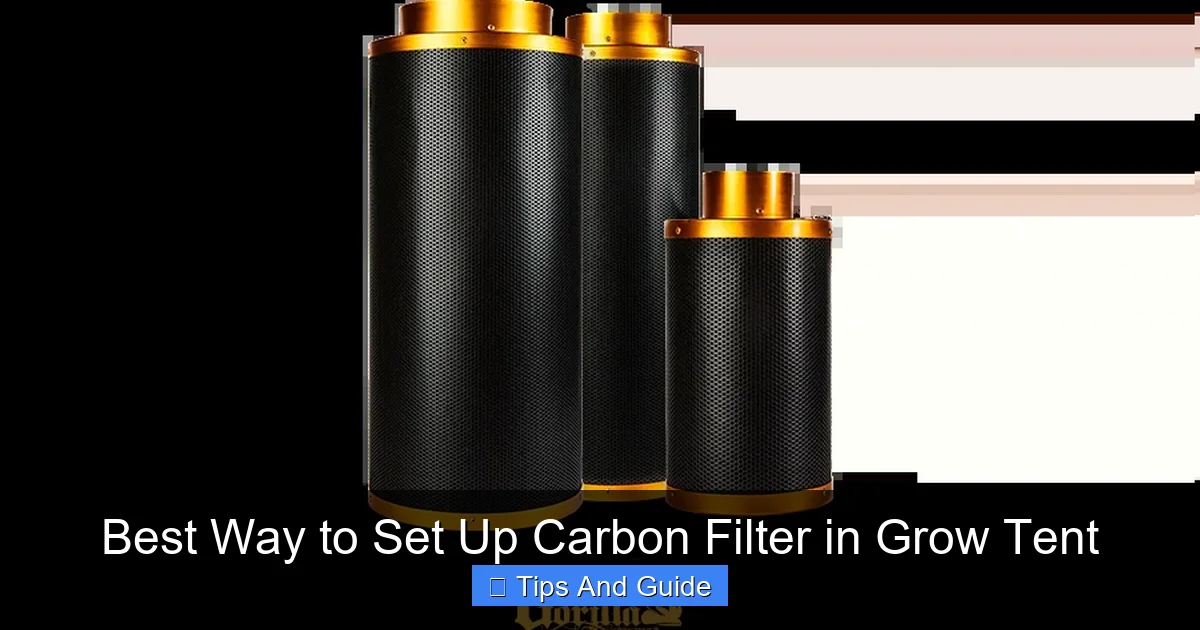
Best Way to Set Up Carbon Filter in Grow Tent
Setting up a carbon filter in your grow tent is essential for controlling odors and maintaining air quality. This guide walks you through the best placement, fan configuration, and maintenance practices to maximize efficiency and keep your grow space discreet and healthy.
Key Takeaways
- Mount the carbon filter securely inside the tent to save space and improve airflow efficiency.
- Use an inline fan to pull air through the filter—this setup removes odors more effectively than pushing air.
- Position the filter near the top of the tent since heat and odors rise, making upper placement ideal.
- Ensure proper ducting and sealing to prevent air leaks and maintain strong suction.
- Replace the carbon filter every 12–18 months or when odor breakthrough occurs.
- Combine with exhaust and intake fans for balanced airflow and temperature control.
- Regular cleaning and inspection extend filter life and improve performance.
📑 Table of Contents
- Why a Carbon Filter Is Essential in Your Grow Tent
- Choosing the Right Carbon Filter for Your Grow Tent
- Best Placement for Your Carbon Filter
- Pairing Your Carbon Filter with the Right Fan
- Setting Up Ducting and Sealing for Maximum Efficiency
- Maintaining Your Carbon Filter for Long-Term Performance
- Combining Carbon Filtration with Other Grow Tent Systems
Why a Carbon Filter Is Essential in Your Grow Tent
Whether you’re growing herbs, vegetables, or flowering plants, a grow tent can quickly become a source of strong odors. Even with the best ventilation, some smells are hard to contain—especially during the flowering stage. That’s where a carbon filter comes in. It’s one of the most effective tools for odor control, trapping volatile organic compounds and keeping your grow space discreet.
But simply hanging a carbon filter isn’t enough. To get the best results, you need to set it up correctly. A poorly installed filter can lead to weak airflow, reduced efficiency, and even mold or mildew due to stagnant air. The best way to set up a carbon filter in a grow tent involves strategic placement, proper fan pairing, and consistent maintenance. In this guide, we’ll walk you through every step to ensure your carbon filter works at peak performance.
Choosing the Right Carbon Filter for Your Grow Tent
Before you install anything, you need the right filter. Carbon filters come in various sizes and qualities, so picking the correct one depends on your tent size and fan capacity. A general rule is to match your filter’s CFM (cubic feet per minute) rating with your exhaust fan’s output. For example, if your fan moves 200 CFM, choose a filter rated for at least 200 CFM.

Visual guide about Best Way to Set Up Carbon Filter in Grow Tent
Image source: rusticaly.com
Filter Size and Tent Compatibility
Most grow tents range from 2×2 feet to 10×10 feet. For a 4×4 tent, a 4-inch carbon filter is usually sufficient. Larger tents may require 6-inch or even 8-inch filters. Always check the manufacturer’s recommendations, but aim for a filter that can handle 1.5 to 2 times your fan’s CFM for optimal performance.
Quality Matters: Look for Virgin Activated Carbon
Not all carbon filters are created equal. High-quality filters use virgin activated carbon, which has a larger surface area and better adsorption capabilities. Avoid cheap filters with recycled carbon—they clog faster and lose effectiveness quickly. Brands like Phresh, Can-Filter, and TerraBloom are known for reliable performance.
Best Placement for Your Carbon Filter
Where you place your carbon filter can make or break your odor control system. The goal is to capture odors before they escape and ensure smooth airflow throughout the tent.
Mount It Inside the Tent (Near the Top)
The best way to set up a carbon filter in a grow tent is to mount it inside, near the upper third of the tent. Heat rises, and so do odors. By placing the filter high up, you’re targeting the warmest, most odor-rich air. Use sturdy hooks or a mounting bracket to secure it to the frame. Make sure it’s stable and won’t fall during operation.
Avoid Floor Placement
Placing the filter on the floor might seem convenient, but it’s inefficient. Cooler air near the bottom contains fewer odors, and dust can clog the filter faster. Plus, floor placement takes up valuable grow space and increases the risk of water damage if you’re using a humidifier or misting system.
Pairing Your Carbon Filter with the Right Fan
A carbon filter alone can’t move air—it needs a fan to pull or push air through the carbon bed. The type and placement of the fan determine how well your system works.
Use an Inline Fan to Pull Air Through the Filter
The most effective setup uses an inline fan to pull air through the carbon filter. This method creates negative pressure inside the tent, which helps draw in fresh air from intake vents and ensures all air passes through the filter before exiting. Mount the fan at the outlet side of the filter, connected via ducting.
Fan Size and CFM Matching
Your fan should match or slightly exceed the filter’s CFM rating. For example, a 4-inch filter with a 200 CFM rating pairs well with a 200–250 CFM inline fan. Too weak a fan won’t move enough air; too strong a fan can create excessive pressure and reduce filter efficiency. Use a fan speed controller to fine-tune airflow as needed.
Setting Up Ducting and Sealing for Maximum Efficiency
Proper ducting ensures that air flows smoothly from the tent, through the filter, and out of your space. Leaks or kinks in the ducting can ruin your system’s performance.
Use Flexible Aluminum Ducting
Flexible aluminum ducting is lightweight, easy to install, and resistant to heat and moisture. Connect one end to the carbon filter’s outlet, then route it to the inline fan, and finally to an exhaust vent or window. Keep the ducting as short and straight as possible to reduce resistance.
Seal All Connections
Use duct clamps or high-quality duct tape to seal every joint. Even small leaks can let unfiltered air escape or allow outside air to enter, reducing efficiency. Check all connections regularly, especially after moving equipment or adjusting the setup.
Route Ducting Outside or to a Vent
Always exhaust filtered air outside the grow tent—ideally out a window, through a wall, or into a vent. Never recirculate the air back into the tent unless you’re using a closed-loop system with additional filtration. For indoor setups, consider using a ducting silencer to reduce noise from the fan.
Maintaining Your Carbon Filter for Long-Term Performance
A carbon filter won’t last forever. Over time, the activated carbon becomes saturated and loses its ability to trap odors. Regular maintenance helps extend its life and keeps your grow tent smelling fresh.
Inspect and Clean Monthly
Every month, check the filter for dust buildup on the outer mesh. Use a soft brush or vacuum with a brush attachment to gently clean the surface. Avoid using water—it can damage the carbon and reduce effectiveness.
Replace the Filter Every 12–18 Months
Even with perfect care, carbon filters have a limited lifespan. Most last between 12 and 18 months, depending on usage and environmental factors. If you notice odors returning despite a clean fan and ducting, it’s time to replace the filter. Don’t wait too long—once the carbon is saturated, it can start releasing trapped compounds back into the air.
Monitor Airflow and Odor Levels
Pay attention to changes in airflow or unusual smells. A drop in fan performance or a faint odor near the exhaust could indicate a clogged filter or ducting issue. Address problems early to avoid bigger issues like mold or plant stress.
Combining Carbon Filtration with Other Grow Tent Systems
For the best results, integrate your carbon filter with other environmental controls. A well-balanced grow tent uses multiple systems working together.
Balance Exhaust and Intake Airflow
Your carbon filter and exhaust fan remove stale air, but you also need fresh air coming in. Use passive intake vents or an intake fan to maintain proper air exchange. This balance prevents negative pressure from becoming too strong, which can stress plants and reduce growth.
Control Temperature and Humidity
High humidity can reduce the lifespan of your carbon filter and promote mold. Use a dehumidifier if needed, and monitor levels with a hygrometer. For tips on managing moisture, check out our guide on the best way to control humidity in grow tent. Similarly, if your tent runs too hot, consider the best way to keep grow tent cool to protect both your plants and equipment.
Consider Adding a Pre-Filter
A pre-filter, like a foam sleeve over the intake, catches dust and large particles before they reach the carbon filter. This simple addition can significantly extend the life of your main filter and reduce maintenance frequency.
By following these steps, you’ll create a clean, odor-free grow environment that supports healthy plant growth and keeps your operation discreet. The best way to set up a carbon filter in a grow tent isn’t just about buying the right gear—it’s about smart installation, proper maintenance, and integration with your overall climate control strategy.
Frequently Asked Questions
How often should I replace my carbon filter?
Most carbon filters should be replaced every 12 to 18 months. However, if you notice odors returning or reduced airflow, it may be time for a replacement sooner.
Can I place the carbon filter outside the grow tent?
Yes, but it’s less efficient. Placing the filter inside the tent, near the top, allows it to capture warm, odor-rich air directly. External placement can work but may require longer ducting and stronger fans.
Do I need an inline fan with a carbon filter?
Yes. A carbon filter doesn’t move air on its own. An inline fan is necessary to pull or push air through the carbon bed for effective odor removal.
Can I clean and reuse a carbon filter?
You can clean the outer mesh to remove dust, but the activated carbon inside cannot be reactivated at home. Once saturated, the filter must be replaced.
Will a carbon filter reduce humidity in my grow tent?
No, a carbon filter only removes odors and particles. To control humidity, use a dehumidifier or adjust your watering and ventilation. Learn more in our guide on the best way to control humidity in grow tent.
Is it better to push or pull air through the carbon filter?
Pulling air through the filter (with the fan on the outlet side) is more effective. It creates negative pressure, ensuring all air passes through the carbon and improving overall efficiency.